Choosing a gamelan depends on the sound and playing experience you want, as different designs vary in their number of notes, tuning, pitch, resonance and construction. Smaller instruments can produce brighter, higher tones, while larger designs with broader metal bars can offer deeper sound and longer resonance, making each better suited to different styles of improvisation and playing.
Compare the number, size and shape of the notes, along with tuning and construction. Smaller notes generally sound brighter and higher, while larger bars offer a fuller sound with longer resonance. Tuning also varies, so if you want to play familiar Western melodies, check the individual pitches rather than assuming a standard scale. We measured each instrument below to help you compare.
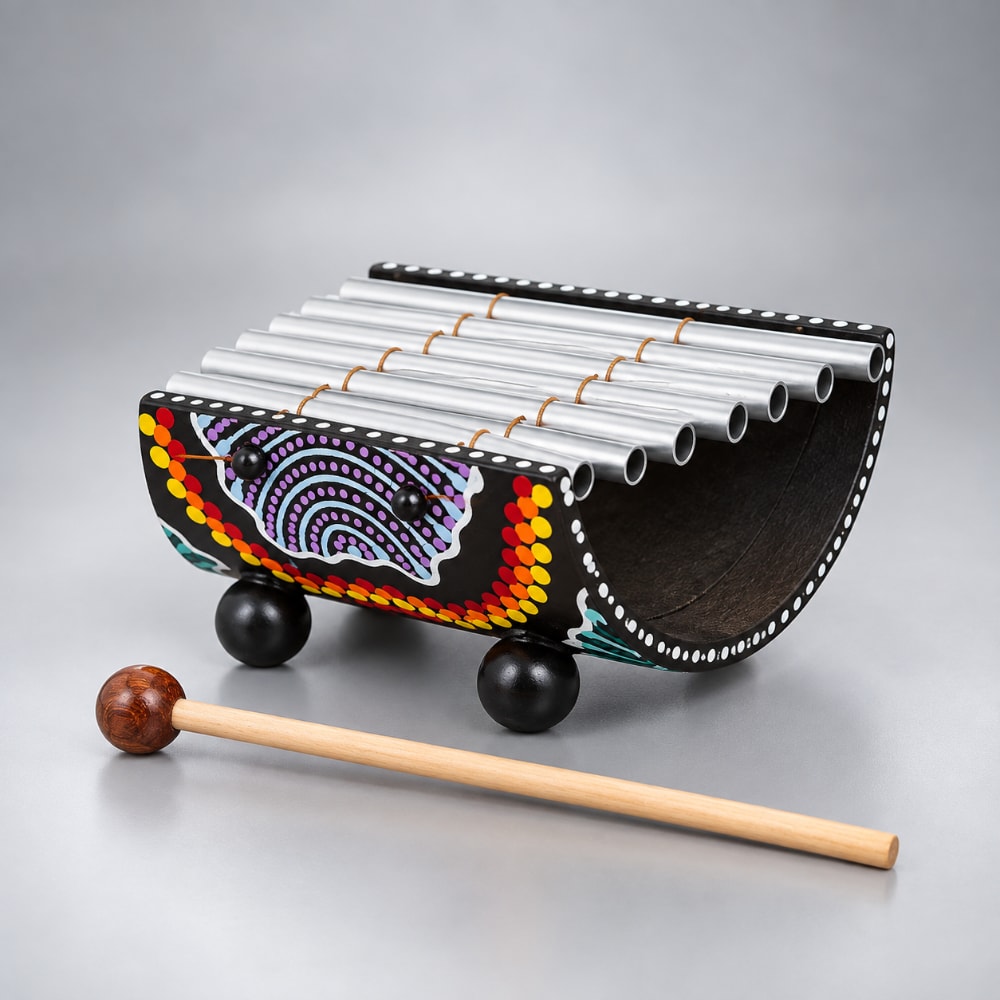
Penebel Gamelan – 7 Notes

The Penebel is the smallest and most affordable option, with seven small tubular notes producing a bright, high-pitched sound. Its lightweight, hand-painted frame makes it ideal for beginners and free improvisation. Two instruments tested had completely different pitches, showing that each Penebel is individually tuned rather than following a fixed scale. Best for players wanting an affordable, compact and bright-sounding gamelan.
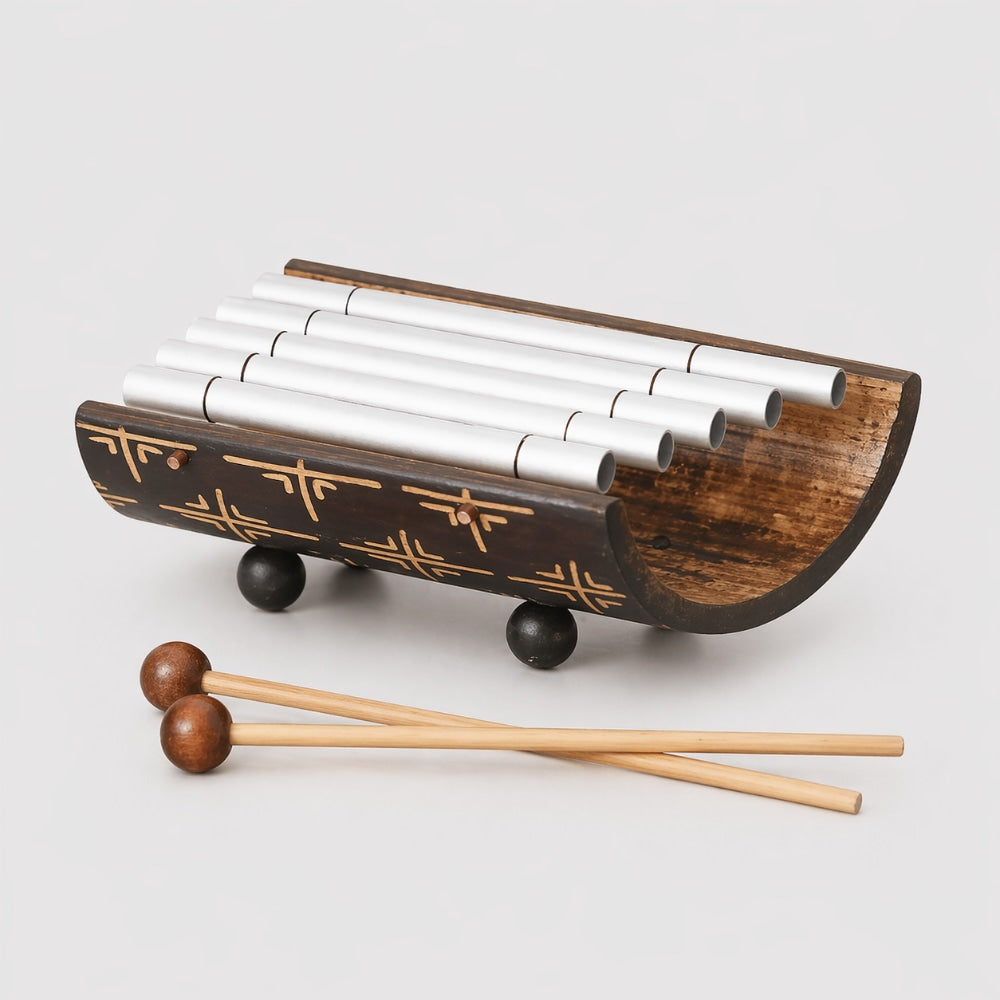
Gamelan – 5 Notes
The 5-Note Gamelan has thicker tubes than the Penebel, producing a fuller, more resonant sound. Its larger bamboo frame has four wooden feet rather than three, providing greater stability. The instrument tested measured C, D, D, F♯ and G♯, making it better suited to simple patterns and improvisation than familiar Western melodies. Best for players wanting fewer notes, fuller resonance and a sturdier design.
Tenang Gamelan – 8 Notes
The Tenang has eight broad, flat metal bars that produce a fuller sound and longer sustain than the smaller tubular models. Its freestanding, hand-painted frame gives it a more substantial feel, while the instrument tested measured C, C, E, F♯, C♯, A, B and C. Best for players wanting more notes, broad bars and rich resonance.
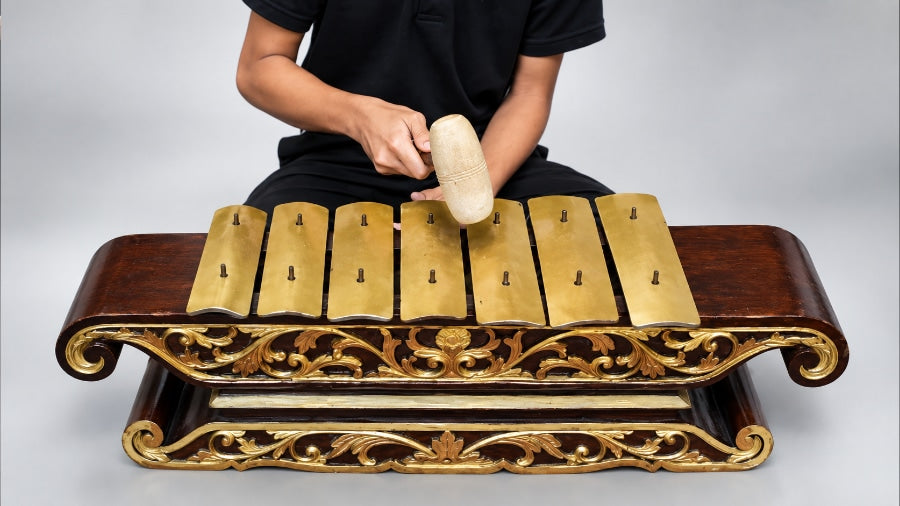
Gangsa Gamelan – 7 Notes
The Gangsa is the most substantial option, with seven broad metal bars, a solid wooden frame and a flat base that provides excellent stability. Its larger bars produce strong resonance and long sustain, while the traditional hammer-style beater gives it a distinctive playing feel. The instrument tested measured C♯, F, F♯, A, C, C♯ and F, so it does not follow a conventional Western scale. Best for players wanting strong resonance, stability and a substantial traditional-style instrument.
Which Gamelan Should You Choose?

Choose the Penebel for a compact, affordable introduction with seven bright notes; the 5-Note Gamelan for thicker notes, fuller resonance and relaxed improvisation; the Tenang for eight broad, flat bars with longer sustain; or the Gangsa for the strongest resonance, substantial wooden construction and greatest stability. Tuning varies between instruments, so consider the pitch, attack and sustain alongside the number and style of notes when choosing.