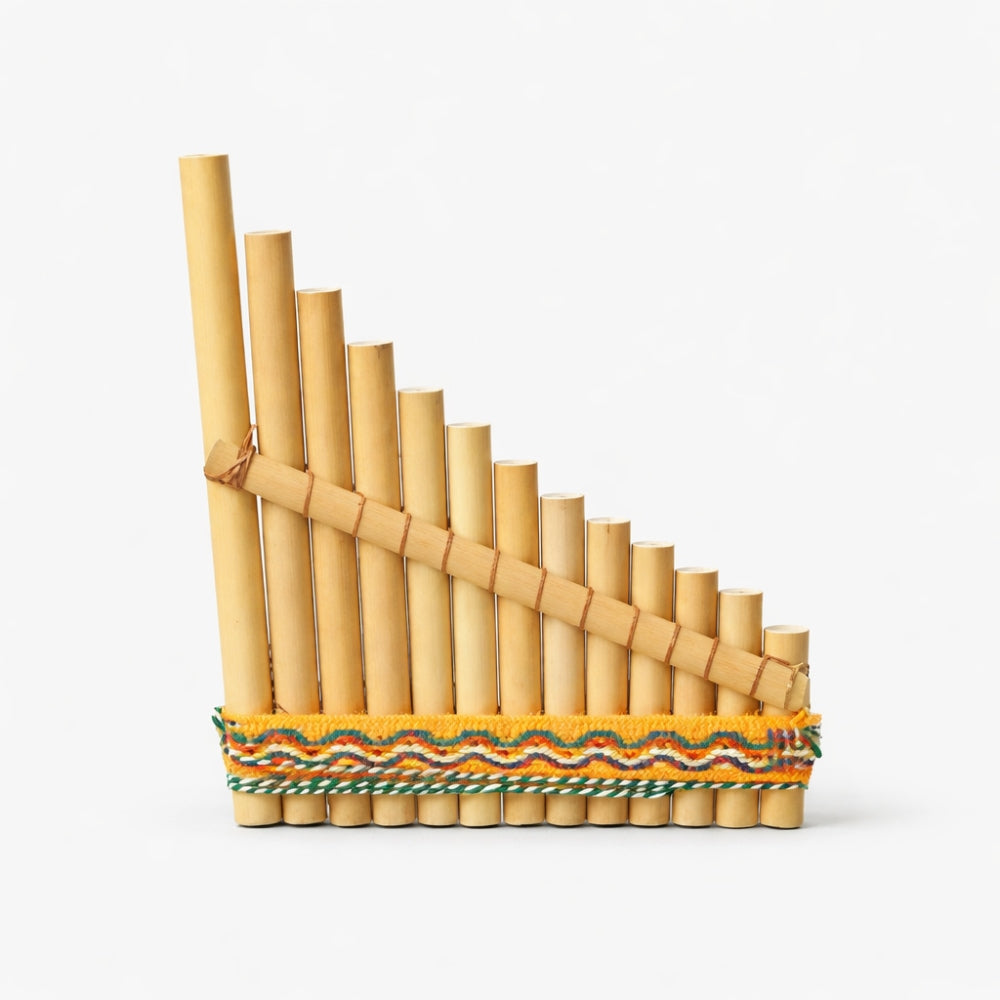

The soothing, melodic sound of the panpipes—a traditional Andean instrument—has captivated musicians for centuries. If you've been curious about the instrument, you may have found an accessible gateway, the virtual panpipes.
Our free online tool allows you to experiment with melodies and hear the unique tones directly from your browser. However, while the virtual tool is an excellent sampler, nothing replaces the authentic sound and cultural connection of a handcrafted bamboo instrument. This guide compares the digital experience with the physical instrument, helping you decide when you're ready to make the jump to real music.
The Virtual Advantage
Virtual panpipes serve as a powerful, risk-free purpose for beginners. Our online tool allows you to click and play authentic sounds instantly, perfect for testing melodies, hearing the difference between high and low pipes, and transcribing music.
Since the virtual instrument works with real recorded sounds, it’s an ideal way to practice and explore melodies before committing to a purchase. Teachers can use it for classroom demonstrations, and beginners can use it to build confidence before developing the essential breath control required for the real instrument. The primary advantage is convenience: no apps or downloads needed—you can start playing instantly online.
The Real Differences
The jump from virtual to real panpipes introduces three irreplaceable elements: Breath Control, Tone, and Material. The real instrument requires a precise embouchure (mouth shape) and blowing position to produce a clear sound. The ability to control your breath and move the instrument to change notes is a skill you cannot learn digitally.
Most importantly, the virtual instrument cannot replicate the warm, resonant tone provided by a handcrafted instrument made from natural cane reeds or bamboo. The physical instrument offers richer sound quality, durability, and a deep connection to the traditional Peruvian folk instrument.
Choosing Your First Real Panpipes

Once you've decided to move from digital practice to real music, you must choose the right instrument size for your goals, and all of our panpipes are handcrafted from bamboo, featuring a colorful woven band reflecting the authentic Andean design. We offer three main types: the Antares Panpipes, which are our smallest and most popular instrument, featuring a sweet delicate sound that is very easy to play and an excellent choice for beginners.
The Zampona Panpipes is a double variation with two sets of pipes, producing a fuller sound perfect for playing harmonies and more complex music and finally, the Zanka Panpipes which is the largest in our collection, which is perfect for playing lower-pitched melodies that provide a solid foundation for ensembles.