
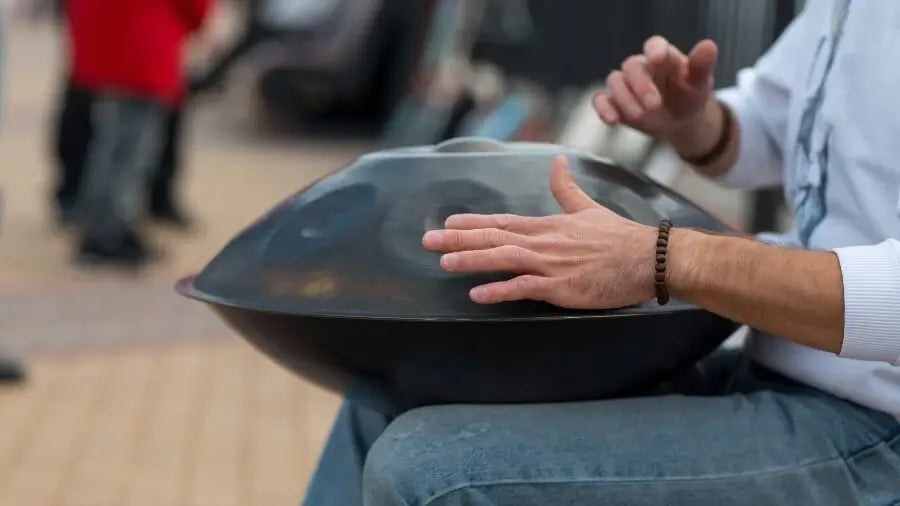
Choose a handpan by its sound, scale and response, then compare the practical details before buying. This guide explains what beginners should listen for, how stainless and nitrided steel can differ, and what our Dreamland Handpan offers.
Choosing a Handpan for Beginners

Choose a scale you enjoy listening to, then compare tuning, note response, sustain and the physical reach between fields. A smaller note set can make exploration manageable, while extra notes and underside fields add possibilities and coordination demands. A pentatonic layout limits the available notes but does not make timing or phrasing automatic. Ask for a demonstration of the exact instrument where possible, including soft strikes and combinations of notes. Compare what the price includes—case, delivery, warranty and access to retuning—rather than treating a low price or polished finish as proof of value.
Stainless Steel vs. Nitrided Steel Handpan

Stainless steel handpans often offer longer sustain and overlapping resonance, while nitrided-steel models often have a drier attack and more defined note separation. These are tendencies: shaping, tuning and the individual instrument also influence the sound. Stainless steel generally resists corrosion better, but both materials need appropriate care and dry storage. For slower melodies you may enjoy lingering notes; for busier rhythms, listen for how clearly the notes separate. Compare recordings or play both, and follow the maker’s cleaning and protective-product advice rather than choosing by colour or assuming one material guarantees higher quality.
Where to Buy a Handpan

The Dreamland Handpan is a stainless-steel instrument made in Vietnam, with hand-tuned tone fields and a padded backpack bag for transport. Compare its listed notes, scale and sound with the music you want to play, and check that its size and layout feel comfortable. Dedicated beginners can learn on it, while its response and note combinations offer scope for developing players.


