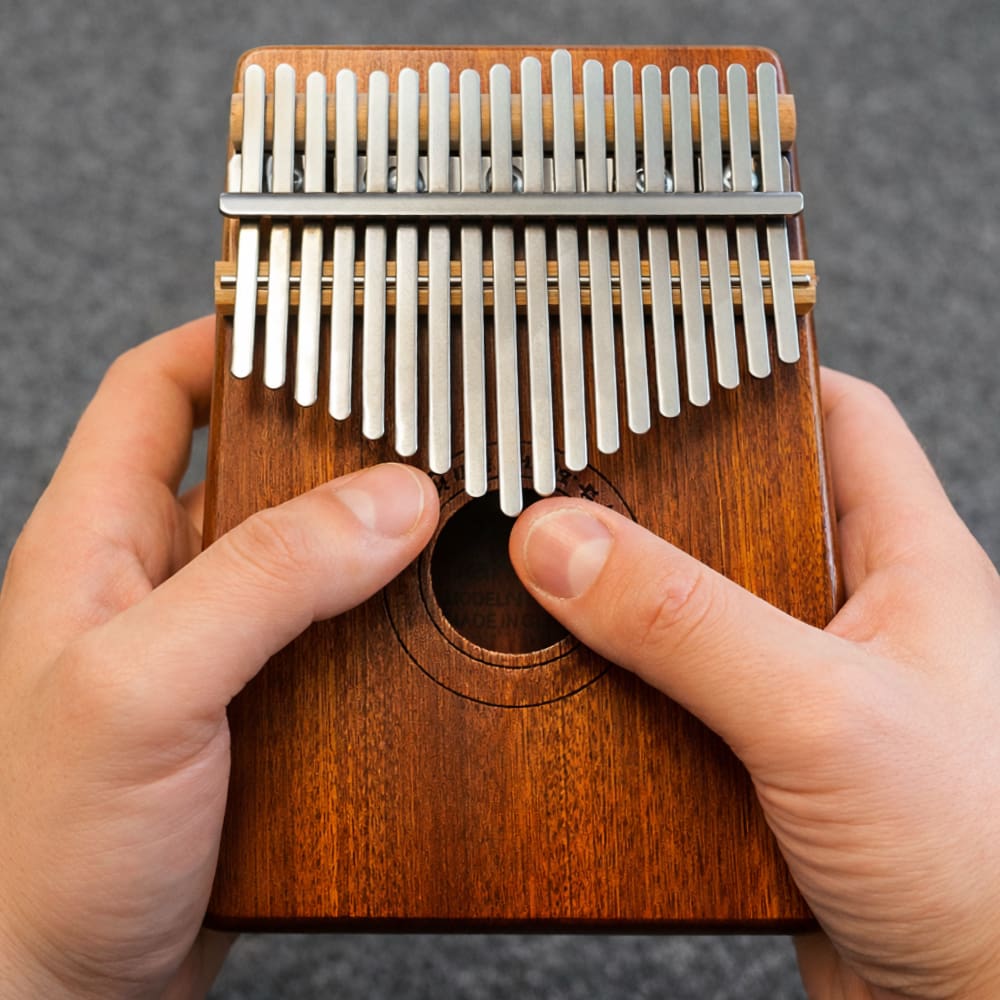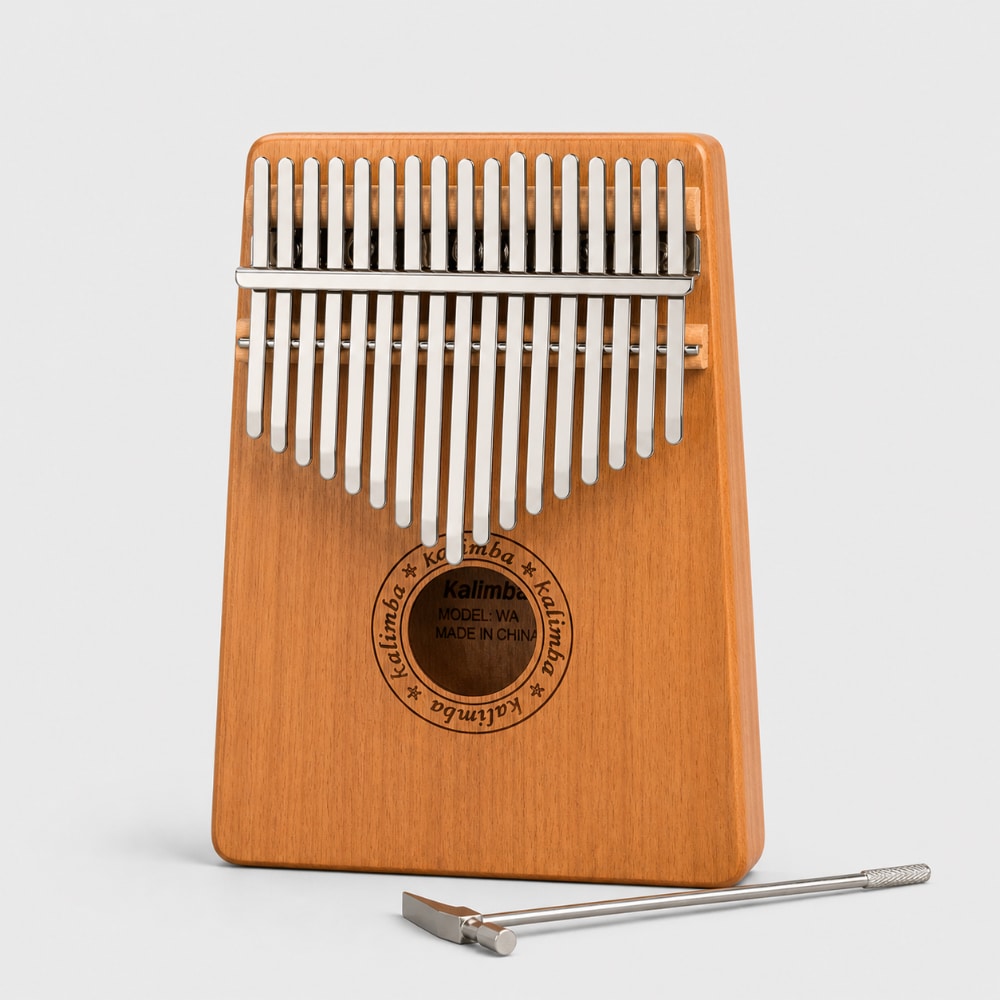
Final Fantasy kalimba tabs are popular because the series is built on strong, singable melodies that translate beautifully to a 17-note kalimba in C major—soft, emotional themes sound warm and intimate, while upbeat cues (like victory fanfares) become bright, punchy riffs. Below you’ll find a set of iconic Final Fantasy songs arranged as kalimba tabs, plus quick context under each one so you know what you’re playing, what it’s from, and what to listen for as it comes to life on the kalimba.
1. 1000 Words – Final Fantasy X-2 OST
A vocal ballad associated with Yuna in Final Fantasy X-2 (2003), best known through Koda Kumi’s “1000 no Kotoba” theme usage and the in-game performance versions.
On kalimba it becomes a gentle, lyrical melody—let the notes ring and keep your tempo steady so the “sung” phrasing still feels emotional.
5′ 6′ 1′ 2′ 3′ 2′ 7 5 1′
6 1′ 5′ 6′ 1′ 7 1′ 2′ 5′ 1′
3′ 4′ (2′ 4′ 6′ 1”)
6 1′ 5′ 1 2 3
‘5 1 2 3 3 2 3 4
1′ (1 3 5) 1 2 3
5 1′ 5′ 5′ 4′ 1′ 4 (1 3)
5 1′ 1′ 1′ 7 1′ 1′
5 1′ 2′ 2′ 3′ 4′ 3′ 2′ 1′
5 4
1′ (5 7 2′) 1′ 2′ 3′ 3′
2′ 3′ 4′ 3′ 4′ 5′ 5′ 1′ 1′
6 1′ 2′ 2′ 1′
4 3 2 3
5 1′ 1′ 1′ 7 1′ 1′
5 1′ 2′ 2′ 3′ 4′ 3′ 2′ 1′
5 4
1′ (5 7 2′) 1′ 2′ 3′ 3′
2′ 3′ 4′ 3′ 4′ 5′ 5′ 6′ 1′
6 1′ 2′ 2′ 1′
4 3 3 4 5
1′ 1′ 1′ 1′ 1′ 2′ 3′ 5
(4 6 1′) 1′ 1′ 1′ 1′ 2′ 3′
4′ 3′ 2′ 1′ 1′
1′ 7 1′ 2′ 1′
1′ (1′ 3′ 5′) 1′ 7
1′ 1′ 6′ 5′ 3′ 2′ 1′
1′ 1′ 1′ 1′ 1′ 2′ 3′ 5
1′ 2′ 3′ 3′ 3′ 3′ (6 1 3′) 4′ 5′
6′ 5′ 3′ 2′ 1′
1” 7′ 5′ 1′
5 6 5 6 7 1′
6 1′ 2′ 3′ 4′ 2′
2. Game Over – Final Fantasy VII
The Final Fantasy VII “Game Over” cue is a short, dramatic sting designed to hit fast and emotionally, rather than be a full song. On kalimba it sounds sharp and urgent—play it clean and slightly detached so the rhythm lands with that “sudden stop” feeling.
6 1 3 6 7
2 5 7 1*
4 6 1* 2*
3 5 7 2* 3* 5* 7* 2** 3**
(461*1**) 6* 4* 3* (572*)
(357) 3* 4* 5* (3577*)
6* 5* (461*4*) 6 5 6 (1353*)
7 (11*) 2 3 5 1* 2* 3* 5* 1** 2** 3**
3. Final Fantasy IV – Rydia’s Theme
A character theme from Final Fantasy IV (1991) that’s remembered for its innocent, storybook quality—simple but deeply nostalgic. On kalimba it sounds delicate and bright; aim for an even touch so the melody feels “light” rather than heavy.
1 (5’ 5) (2 2’) 5
1’ 6̲ (5’ 3) (7-2’) 5
6 4̲ (5’ 1) (2 2’) 5
4 5̲ (5’ 2) (6 2’) 5 5
1 (5’ 5) (2 2’) 5
1’ 6̲ (5’ 3) (7-2’) 5
6 4̲ (5’ 1) (2 2’) 5
4 5̲ (5’ 2) (6 2’) 5 5
(1 2’) (3’ 5) (1’ 1) 5
1 5 (6̲ 2’) (3’ 3) (1’ 1) 3
6 3’ (3’ 4̲) (1 4’) (5 2’) 1
(4-6) (1’ 5̲) 2 7 2
5 (1 2’) (3’ 5) (1’ 1) 5
1 5 (6̲ 2’) (3’ 3) (1’ 1) 3
6 3’ (3’ 4̲) (1 4’) (5 2’) 1
(4-6) (3’ 5̲) 2 2’ 2
5 (5’ 3) (1 6’) 7 1
7 (3’ 3) 2’ (6̲ 2’) 3 1’ 3
5 (4̲ 6’) (7’ 1) (1’ 5) 1
1’ (4 4’) 3’ (3’ 5̲) 2 (5 2’) 2
5 (1 2’) (3’ 5) (1’ 1) 5
1 5 (6̲ 2’) (3’ 3) (5’ 7) 3
6 (5’ 4̲) 6̲ (3 4’) 3’ (5̲ 2’) 2 (6-1’)
(5̲ 2’) #2’ (1’ 1) 5
5 (4̲ 2’) (1 #2’) (1’ 4) 5
5 (1 2’) ( 3’ 5) (1’ 3) 1
1 5 2’ 5’ 1’
1 (5’ 5) (2 2’) 5
1’ 6̲ (5’ 3) (7-2’) 5
6 4̲ (5’ 1) (2 2’) 5
4 5̲ (5’ 2) (6 2’) 5 5
1 (5’ 5) (2 2’) 5
1’ 6̲ (5’ 3) (7-2’) 5
6 4̲ (5’ 1) (2 2’) 5
4 5̲ (5’ 2) (6 2’) 5
4. Final Fantasy – Victory Fanfare
The classic Final Fantasy victory fanfare is one of gaming’s most recognisable jingles, originally tied to the early series identity and later reused across titles.
On kalimba it’s naturally punchy—keep it crisp, slightly staccato, and don’t over-pedal the ringing notes or it turns muddy. You will need to tune the B to B#
2* 2* 2* 2* 6 7 1* 2* 1* 2*
5. Someday the Dream Will End – Final Fantasy X
From Final Fantasy X (2001), whose soundtrack is credited to Nobuo Uematsu, Masashi Hamauzu, and Junya Nakano. This one shines on kalimba as a calm, reflective theme—use consistent dynamics and let longer tones ring to keep it “floating. You will need to custom tune B to A#
2′ 3′ 4′ 3′ 4′ 5′ 6′ 7′ 6′ 5′
6′ 5′ 4′ 3′ 4′ 3′ 2′ 1′
5′ (7 2′) 3′ 4′ 3′ 4′ 5′ 6′
5′ 1” 7′ 6′ 5′ 4′ 3′ 1′ 1′ 2′ 2′
2” 3” 1” 2”
(2 4 6-2′) 3′ 4′ 3′
4′ 5′ 6′ 5′ 4′ 3′ 2′
6 (4 6-2′) 3′ 4′ 3′
4′ 5′ 6′ 2′ 6′
(2 4 6-2′) 3′ 4′ 3′
4′ 5′ 6′ 5′ 4′ 3′ 2′
6 (4 6-2′) 3′ 4′ 3′
4′ 5′ 6′ 2′ 6′
6′ 1” 5′ 6′ 5′ 4′ 2′ 4′ 4′ 5′ 6′
1” 5′ 4′ 3′ 2′
4′ 5′ 6′ 1” 5′ 6′ 5′ 4′ 2′ 4′ 4′ 5′ 6′
1” 3” 1” (5′ 7′ 2”)
6′ 1” 5′ 6′ 5′ 4′ 2′ 4′ 4′ 5′ 6′
1” 5′ 4′ 3′ 2′
4′ 5′ 6′ 1” 5′ 6′ 5′ 4′ 2′ 4′ 4′ 5′ 6′
1” 3” 1” (2′ 4′ 6′-2”)
6. Final Fantasy X-2 – Yuna’s Ballad
Another FFX-2 (2003) Yuna-associated ballad idea—melodic, intimate, and built for expressive phrasing rather than speed. On kalimba it’s all about sustain and spacing: play slower than you think you should, and keep your rhythm smooth.
E’ (A’ C”) D” (G’ B’)
E’ (F’ A’) B’ (E’ G’)
C’ G’ F’ E’ C’
A C’ C’ (G B D’)
E G B C’ E G B D’ C’
E G B C’ E G B D’
E G G’ E’ C’ D’ C’ D’ E’
C’ G A C’ C’ G
C’ B C’ B G
E G G’ E’ C’ D’ C’ D’ E’
C’ D’ F’ G’ E’ C’
(A C”) B’ G’ C’
E G B C’ E G B D’ C’ G’ E’
E G B C’ C” B’ G’ E G B D’
E G G’ E’ C’ D’ C’ D’ E’
C’ G A C’ C’ G
C’ B C’ B G D E
G G’ E’ C’ D’ C’ D’ E’
C’ D’ F’ G’ E’ C’
(A C”) B’ G’ D’ C’
E G B C’ E G B D’
G C’ G’ (G’-E) G B C’ G’ G
E G B (E G B D’)
7. Final Fantasy VI – Celes Theme
A signature emotional theme from Final Fantasy VI (1994), often remembered for its romantic, bittersweet tone and strong melodic contour. On kalimba it sounds warm and “story-like”—prioritise clarity on leaps so the melody doesn’t blur.
3* 4* (15*) 3 (51*)
2* 3* 4* (35*) 5 (77*)
6* 7* (41**) 6 1* 1** (57*)(46*)(35*)
5 7
5* (5*2*) 4* 3* (24*) 4 7 4* (4*1*)
3* 2* (13*) 5 1* 3* (73*)
2* 1* 2* (33*) 5 7 (55*)
3* 4* (15*) 3 (51*)
2* 3* 4* (35*) 5 (77*)
6* 7* (41**) 6 1* 1** (57*)(46*)(35*)5 7
5* (5*2*) 4* 3* (24*) 4 7 4* (4*1*)
3* 2* (13*) 5 1* 3* (73*)
(42*) 1* 2* (1351*)
8. Theme of Love Final Fantasy IV
One of the most iconic FFIV motifs—simple, heartfelt, and designed to be instantly memorable. On kalimba it becomes a sweet lullaby; keep the pulse steady and avoid rushing the emotional peaks.
7 6 3 / 2-4 3′ 3′ 2 4 / 5-7 2′ 3′ 2′ 1′ 7 6 / 3-5 3 2′ 3 5 / 6-1′ 1′ 2′ 1′ 7 6 2 /2-3 1′ 1′ 2 4 / 5-7 7 1′ 2′ 1′ 7 6 / 1-5 3 7 1 5 / 6-3
7 6 3 / 2-4 3′ 3′ 2 4 / 5-7 2′ 3′ 2′ 1′ 7 6 / 3-5 3 2′ 3 5 / 6-1′ 1′ 2′ 1′ 7 6 2 /2-3 1′ 1′ 2 3 / 3-5-7 7 1′ 5-7-2′ 1′ 7 5 / 6-3
6 7 1′ / 5-4-6-1′-3 5 6 3′-4 / 4-5-7-2′ 1′ 5-7 1′ / 3-5-7-2′ 5 5-2′ / 3-6-1′ 3-7 6 7 /4-1′ 7 6-4 7 / 6-1′ 7 6 / 2-4-7 2 4 6 / 3-7 7 6 3 / 2-4 3′ 3′ 2-4-6-1′ 2 / 2-4-5-7 2′ 3′ 2-4-5-7-2′ 1′ 7 6 / 3-5 3 2′ 3-5-7-2′ 3 / 6-1′-3-5 1′ 2′ 6-1′-3-5 7 6 2 / 2-3 1′ 1′ 6-1′ 2 / 5-7 7 1′ 5-7-2′ 1′ 7 5 / 6-3
9. Final Fantasy VII Crisis Core – The Price of Freedom
A key theme from Crisis Core: Final Fantasy VII (2007), with the game’s music led by Takeharu Ishimoto. On kalimba it feels solemn and heroic—play with firm timing and slightly stronger accents on the main motif so it “stands up.”
D’ E’ F’ D’
D’ E’ D’
F’ E’ D’ C’
D’ E’ F’ D’
D’ E’ D’
F’ E’ D’ C’
A B C’ D’ A
A B C B A G
A B C’ D’ A
A C’ C’ C’ B G
A B C’ D’ A
A B C B A G
F A B C’ A
A B A C’ B A G
F A B C’ A
A B A C’ B A G
F G A C’ D’ E’ F’ C’
G A C’ D’ E’ F’ C’ D’ E’
G A C’ D’ E’ F’ C’
G A C’ D’ E’ F’ C’ D’ E’
C D E F A B F
C D E F A B F F A
C D E F A B F
C D E F A B F F A
D’ E’ F’ D’
D’ E’ D’
F’ E’ D’ C’
D’ E’ F’ D’
D’ E’ D’
F’ E’ D’ C’
10. Chocobo – Final Fantasy
The Chocobo theme is upbeat comic relief—bouncy and playful, meant to feel like a cheerful march. On kalimba it works best with short clean notes; if you let everything ring, it loses the “skip.”
(12*) 7 5 2 (461) (461)(1*1)
(257) (257) (461)
(22*) 7 5 2(461) (461) (1*1)
1 2 3 4
(22*) 7 5 3 2* 7 5
7 5 7 6
5 5 (65) 5 4 5 4
5 5 7 2* 3* 4*
(22*) 7 5 3 2* 7 5
7 5 7 6
5 5 6 5 4 5 4
5 5 7 2* 3* 4*
3* 1* 6 4 6 1* 3*
2* 4* 2* 7
1* 6 4 2 4 6 1*
7 7 1* 7 6 7
3* 1* 6 4 6 1* 3*
2* 4* 2* 7
6 6 7 6 5 6 5
6 6 7 1* 2* 3* (572*4*) (REPEAT FROM line 5 to 19)
(22*) 7 5 2 (641) (641) (1*1)
(257) (257) (146)
(22*) 7 5 2 (146) (146) (1*1)
1 2 3 4
11. Melodies of Life (Final Fantasy IX OST)
The main vocal theme of Final Fantasy IX (1999), performed by Emiko Shiratori and widely associated with the game’s emotional ending. On kalimba it sounds intimate and nostalgic—use gentle dynamics and let the melody sing above everything.
G C) C G C’ D’ G’ E’
D’ E’ F’-A-F-D E’-C’-A-C D’-A-F C’-E-G
C’-A-F-D B C’ G’-G-B-D’
G E’-C E E’-E D’ C’ A E C’ B A-F
B C’ D’ G-E-C C B G A-F B C’ A A-C
G C’-E E’ F’-F E’ C’-A E G-B-D’ G D
E’ G’-E G G’-E A’ G’-E’-C’-A F’ F’-F
E’ E’-C’-A-F D’ D’-F E’ F’-F A C’
E’-E D’ D’-C C’ E G A C’ E A
C’ D’ E’-C’-A-F A F’ D’-(G-B) G B C’
G G-B-D’
D’ E’ D’-C C’ E G A G F A B
E G B F A C’ A
F’ E’ D’ C’ G-B C’ D’ G G B C’ D’
E G B E’ G’-E F’ E’-G D’ C’-A D’ E’ A A
C’ E’ F’-D F E’ E-G-B-D’ E G B F E’
F’-A E’ E-G-B-D’ E’ B C’ F-A-C’-E’ F A’-(C’)
F A-C’ F G’ F’ D’-B-G G B D
G A B C’ D’ E’ F’ G’
12. Final Fantasy VIII – Breezy
A light, airy FFVIII piece that matches the game’s calmer, reflective moments (a contrast to its bigger cinematic themes). On kalimba it should feel effortless—play softly and aim for a smooth, flowing legato.
C G A E*
A G E
C G A E*
A G E* C F A D*
A F D* C F A F*
A F F* C G A E*
A G E* C G A E*
A G E* C F A D*
A F D* (CF*) A C* (E*C) G C* (FD*) A C D* B E*
B G* B C G B E* F* E* B G E* C F A D*
C* F D* C B A F* B A F* B C G B E*
B G E* (G*C) B A F* A B E* B (D*F*) F A (E*C) F A (CF*) F (F GBD*F*)
(E*C) C* G E*
C* G E* (G*C) D* A G*
D* A G* (CA*) F* C* A*
F* C* A* (G*C) E* C* G*
E* C* G* (E*C) C* G E*
C* G E* (G* C) D* A G*
D* A G* (CA*) F* C* A*
F* C* A* G*
E** C** G*
C A C* F*
C* A C* (G*C) C* A F*
C* A C* C G C* F*
C* G C* (G*C) C* G F*
C* G C* C G A E*
G A E*
G A E*
G A E* C G C* D*
C* G (FAC* F*)
13. Final Fantasy VI – Terra’s Theme
A defining theme from FFVI—adventurous but emotional, with a melody that feels like “journey music.” On kalimba it becomes bright and forward; keep transitions clean so the melody doesn’t trip over fast changes.
6 7 1* 3* 1*
7 6 7 3
6 7 1* 3* 1*
7 6 7 3*
1* 2* 3* 5* 3*
2* 1* 2* 5
1* 7 6
1* 7 6
6 7 1* 3* 1*
7 6 7 3
6 7 1* 3* 1*
7 6 7 3*
1* 2* 3* 5* 3*
2* 1* 2* 5
1* 7 6
1* 7 6
1* 2* 3* 5* 3*
2* 1* 2* 5
1* 2* 3* 5* 3*
2* 1* 2* 5*
6 7 1* 3* 1*
7 6 7 3
1* 7 6
1* 7 6
14. Final Fantasy VIII OST – Eyes on Me
The famous vocal theme tied to Final Fantasy VIII, recorded by Faye Wong and released as a single in 1999. On kalimba it turns into a tender pop-ballad line—keep it steady and expressive, with longer holds on phrase endings.
51*2*3*5*3*2*3*1*61*2*
51*2*3*5*7*7*1**6*5*6*5*
5*1**1**7*6*6*5*3*5*6*6*5*4*4*3*3*
3*3*2*3*4*3*2*2*1*
671*1*3*5*2*
51*2*3*5*3*2*3*1*61*2*
51*2*3*5*7*7*1**6*5*6*5*
5*1**1**7*6*6*5*
3*5*6*6*5*3*1*3*2*
51*2*3*4*5*5*4*1*3*2*1*
1*3*5*7*6*6*6*7*1**6*5*5*
3*3*4*5*4*4*4*5*6*6*5*5*
1*1*3*5*7*6*6*4*6*7*1**7*5*7*6*
5*5*4*1**4*
1*2*3*3*2*1*72*1*
15. Final Fantasy FF XIV – Matoya’s Cave
“Matoya’s Cave” appears as an arrangement in Final Fantasy XIV, whose music is primarily composed by Masayoshi Soken. On kalimba it’s quirky and magical—lean into the playful rhythm and keep repeated patterns very even.
61*3*1*4*3*2*3*2*1*7
1*3*5*1*6*5*4*3*4*3*2*
3*4*5*72*1*71*6
4*5*6*1*4*3*4*3*2*
5675672*1*71*6
6543212323
51*7671*
3*2*1*2*3*
5*4*3*4*5*
3*2*1*72*1*75
61*3*1*4*3*2*3*2*1*7
1*3*5*1*65*4*3*4*3*2*1
16. Final Fantasy VI – Kids Run Through the City
A lively town/scene cue from FFVI built for motion—short melodic cells that feel like “busy streets.” On kalimba it sounds sparkling—play lighter and don’t slam the tines, or it loses that quick, playful feel.
3* 2* 3* 1*
1* 2* 3* 2* 3* 5*
6* 5* 4* 4* 3* 3* 4* 2*
1* 2* 3* 2* 3* 1*
1* 2* 3* 2* 3* 5*
6* 7* 1** 3*
2* 21
17. Final Fantasy X – Hymn of the Fayth / Song Of Prayer
A sacred, chant-like motif from FFX that’s intentionally repetitive and hypnotic—more atmosphere than “song.” On kalimba it becomes meditative: play with consistent volume and let the resonance do the work.
(22*) (44*) (3*3)
(5*5) (44*) (5*5) (66*) (22*)
(66*) (7*7) (5*5)(66*) (5*5)
(44*) (5*5) (66*) (22*) (22*)
(22*) (3*3) (3*3) (44*) (44*)
(3*3) (1*1) (1*1) (22*) (22*)
18. Aerith Theme – Final Fantasy VII
One of the most recognisable themes from FFVII (1997), often cited as the emotional center of the soundtrack. On kalimba it’s beautiful but exposed—play slowly, keep notes clean, and let the silence between phrases breathe.
C°° B° A° G° E°
C°° B° A° B° E°° E°°
C°° B° A° G° D°
D° E° F° E° D° C° C°
F° E° C° D° C° ( A C° )
E° G° C°° B° G° D°
E° G° C°° B° D°° C°° A° B° G° D°
E° G° C°° B° G° D°
C° D° C°
F° E° C° D° C° ( A C° )
C° D° E° E° F° G°
A° B° C°° A° F° G° A° G°
G° E° B° A° G° C°
G° E° B° A° B° C°°
C°° B° A° G° E°
C°° B° A° B° E°° E°°
C°° B° A° G° D°
D° E° F° E° D° C° C°
F° E° C° D° C°
C°° B° A° G° D°
D° E° F° E° D° C° C° ( F° A° )
E° G° C°° B° G° D°
E° G° C°° B° D°° C°° A° B° G° D°
E° G° C°° B° G° D°
C° D° C°
F° E° C° D° C°
19. Rose of May
A beloved romantic theme from FFIX (often associated with Beatrix) that has a graceful, “courtly” character. On kalimba it sounds elegant—hold your tempo and keep the melody smooth so it feels noble, not rushed.
(6 3) 7 1º (2 7) . 5 . 2 . (1 5) 6 4 (1 3) . 1 . 3 .
(6 3) 7 1º (3 5 7) 5 . 2 (2 5) 6 4 (6 3) 1 3 7 1º
(6 3) 7 1º (5 7 2º) 2º (6 1º 3º) 2º 1º (3 5 7) 7 (2 4 6) 7 1º (1 4) 4 (1 3) 3º 2º 1º 7 5
(6 3) 7 1º (5 7 2º) 2º (6 1º 3º) 2º 1º (3 5 7) 6 5 (1 4) 3º 2º 1º 7 6 (2 5) 6 7 (6 3)
(6 3) 7 1º (5 7 2º) 2º (6 1º 3º) 2º 1º (3 5 7) 7 (2 4 6) 7 1º (1 4) 4 (1 3) 3º 2º 1º 7 5
(6 3) 7 1º (5 7 2º) 2º (6 1º 3º) 2º 1º (3 5 7) 6 5 (1 4) 3º 2º 1º 7 6 (2 5) 6 7 (6 3) 1 3
(5º 5) 7 2º (5º 3) 5 4º (6 1º 3º) 2º (6 1º) 3º (5º 3) 2º 4º (6 1º 3º) 2º (6 1º)
(5º 3) 5 7 (5º 3) 4º (6 1º 3º) 2º (6 1º) 3º (5 7 2º)
(6 3) 7 1º 7 (2 5) . (5º 3) 5 7 (5º 3) 4º (6 1º 3º) 2º (6 1º) 3º
(5º 3) 5 7 2º4º 4º (6 1º 3º) 2º (6 1º) (3º 3) 5 7 (3º 3) 2º (6 1º) 7 6 1º 7 6 7 2º 7 2º (3º 3) . 1
(6 3) 7 1º (5 7 2º) 2º (6 1º 3º) 2º 1º (3 5 7) 7 (2 4 6) 7 1º (1 4) 4 (1 3) 3º 2º 1º 7 5
(6 3) 7 1º (5 7 2º) 2º (6 1º 3º) 2º 1º (3 5 7) 6 5 (4 3) 3º 2º 1º 7 6 (2 5) 6 7 (6 3)
(6 3) 7 1º (5 7 2º) 2º (6 1º 3º) 2º 1º (3 5 7) 7 (2 4 6) 7 1º (1 4) 4 (1 3) 3º 2º 1º 7 5
(6 3) 7 1º (5 7 2º) 2º (6 1º 3º) 2º 1º (3 5 7) 6 5 (1 4) 3º 2º 1º 7 6 (6 3) 6 7 (6 3)
Want More Kalimba Songs You Can Play?

The 17-Note Kalimba Songbook is built for players who know the basics and want to improve by playing real music, not reading lessons. It contains 80 clear, well-paced tablatures written specifically for C-major 17-note kalimbas, helping you build timing, accuracy, confidence, and musical flow simply by playing. There’s no theory overload—just a wide mix of familiar songs (folk, classical, nursery, seasonal, and more) laid out so you can sit down and start immediately. If you enjoy learning through songs and want your kalimba to become a daily habit, this book gives you a long, enjoyable path forward—one melody at a time.