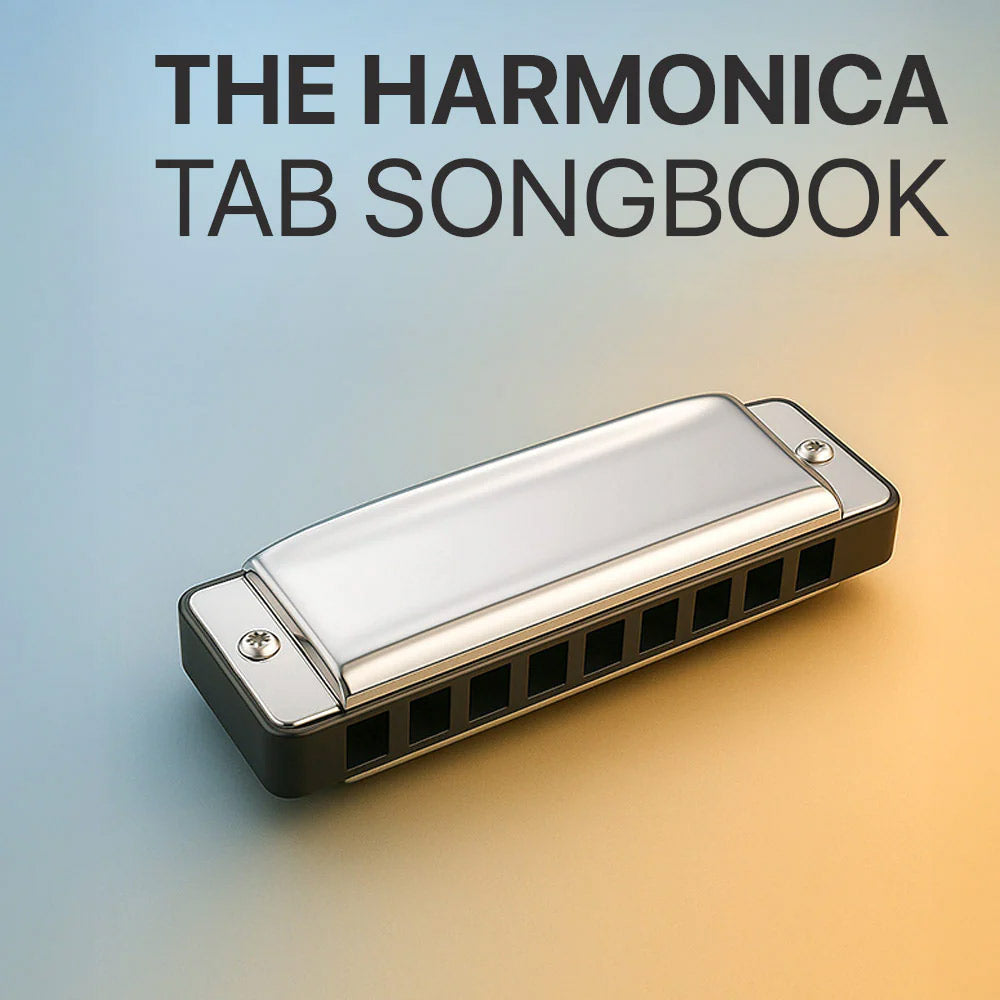

If you’re new to the harmonica, one of the first confusing things you’ll encounter is that notes change depending on whether you blow or draw air through the same hole. This is not a flaw or a trick—it’s the core design of a 10-hole diatonic harmonica and the reason it can play full melodies, chords, and bends. Once you understand blowing and drawing clearly, everything else starts to make sense.
Blowing Notes on the Harmonica
Blow notes are produced when you breathe out into the harmonica and are usually the first notes beginners learn because they’re more stable and easier to control. On a standard 10-hole diatonic harmonica in C, blow notes form the C major chord (C–E–G), which is why playing multiple holes together sounds clean and musical; the blow layout runs C E G C E G C E G C across holes 1–10.
They have a bright, open tone, are less prone to bending for beginners, and are commonly used for melodies in the middle register (holes 4–7), with tablature written as plain numbers—for example, 4 5 6 6 5 4 means blow on holes 4, 5, and 6.
Drawing Notes on the Harmonica
Draw notes are produced when you breathe in through the harmonica and give you different pitches from the same holes, making them essential for blues, folk, and expressive playing. On a standard 10-hole diatonic harmonica in C, draw notes run D G B D F A B D F A across holes 1–10 and have a darker, richer tone that allows note bending on holes 1–6, where much of the instrument’s emotion and character live.
They take slightly more breath control at first but are vital for phrasing, with tablature shown using a minus sign—for example, -4 -5 -6 -6 -5 -4 means draw air through holes 4, 5, and 6.
Seeing Blow vs Draw Side by Side
Learn Through Songs, Not Just Exercises

The Harmonica Songbook teaches harmonica the way it’s meant to be learned—by playing songs, not memorising theory. This focused collection of 80 harmonica tabs for 10-hole diatonic harmonica guides you through real music that naturally builds blow and draw awareness, single-note accuracy, breath control, timing, and phrasing, so you learn not just what to play, but when and why. With beginner-friendly layouts, a wide mix of traditional and modern tunes, skill-building arrangements, and a clean, printable PDF, it turns understanding into music—because blowing and drawing are the foundation, but songs are where real confidence develop.