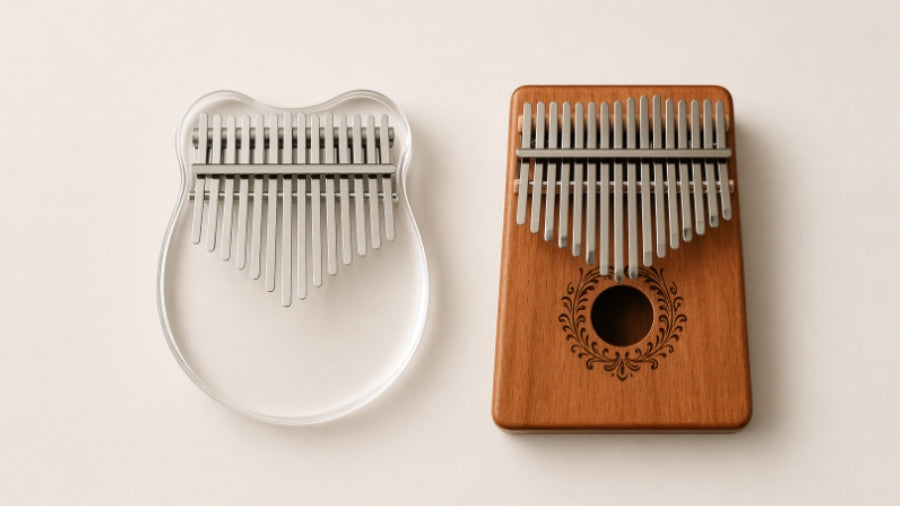
Acrylic and wooden kalimbas may look similar in shape, but they differ significantly in sound, feel, sustainability, and playing experience. Neither option is automatically right or wrong—the best choice depends on how you plan to use the instrument and what you value most: tone, aesthetics, price, or long-term connection with the instrument. Below is a clear, practical comparison to help you decide.
Acrylic Kalimba
An acrylic kalimba is typically factory-made from clear or coloured plastic, offering strong visual appeal and resistance to humidity, so the body won’t warp or crack with climate changes. The trade-off is sound and sustainability: acrylic produces a brighter, sharper tone with less warmth and sustain because the body does not resonate naturally, relies almost entirely on the metal tines, and is made from synthetic, mass-produced materials, making it best suited for decorative use, novelty, or casual playing rather than long-term musical development.
Wooden Kalimba

Which Kalimba Is Right for You?
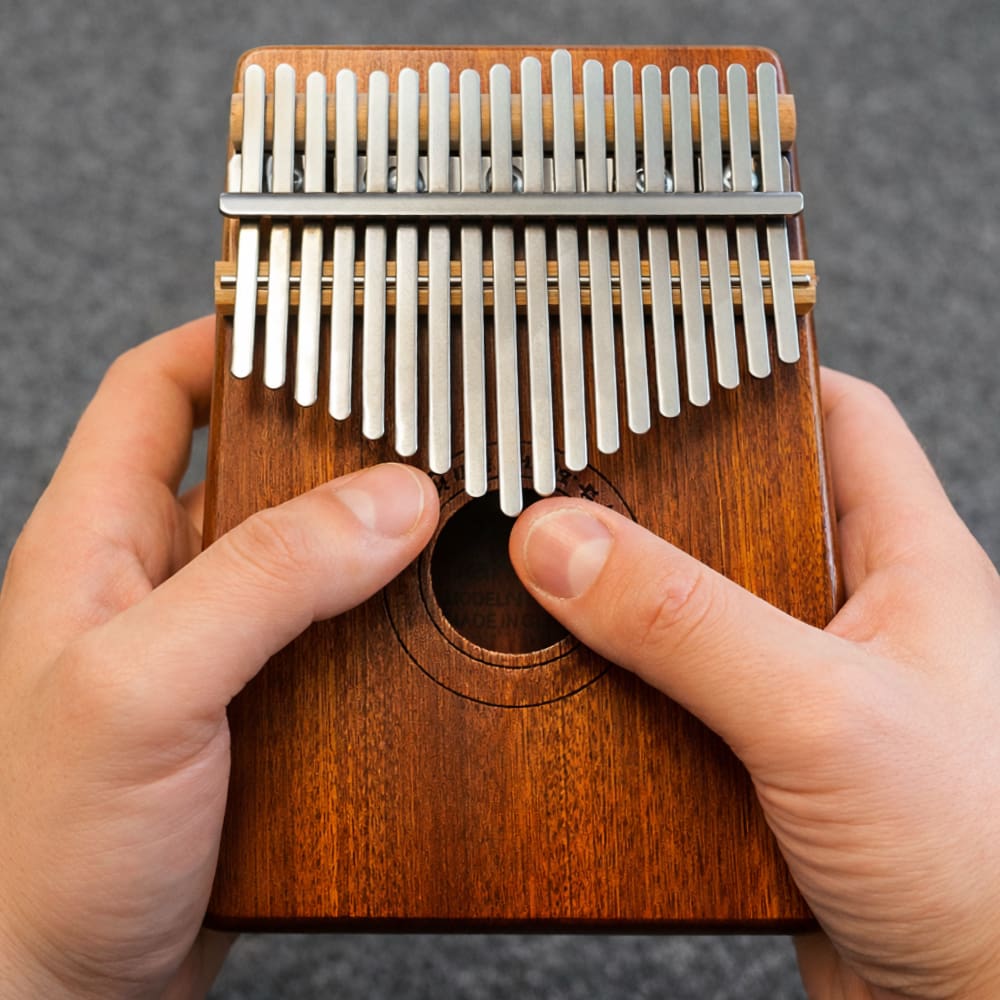
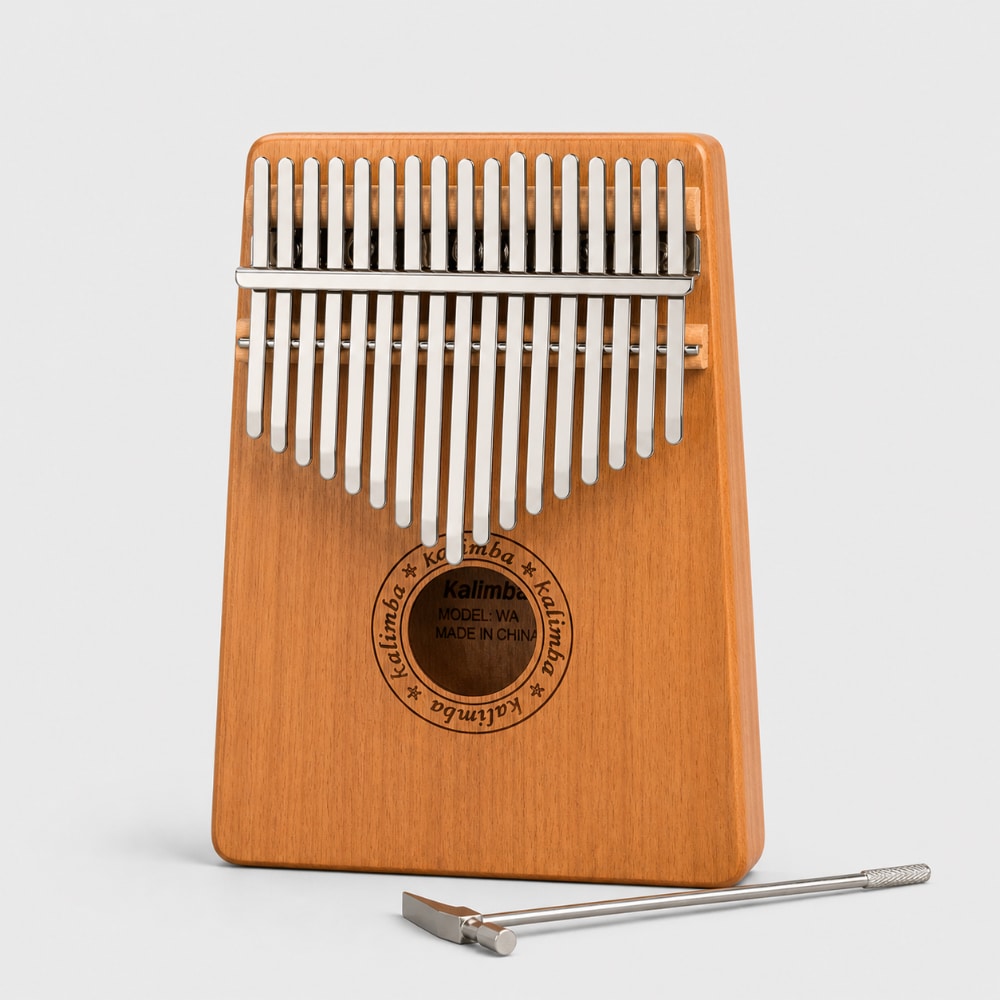
Choosing the right kalimba comes down to sound, feel, and long-term satisfaction: acrylic kalimbas feel smooth and rigid with a clear but fairly flat sound, while wooden kalimbas feel warmer in the hands and produce richer resonance that responds more as your playing improves. Acrylic suits casual play or visual appeal with minimal upkeep, but if tone, sustainability, and lasting musical value matter, a wooden kalimba offers better sound quality and natural resonance, making it the preferred option for most beginners and advancing players.