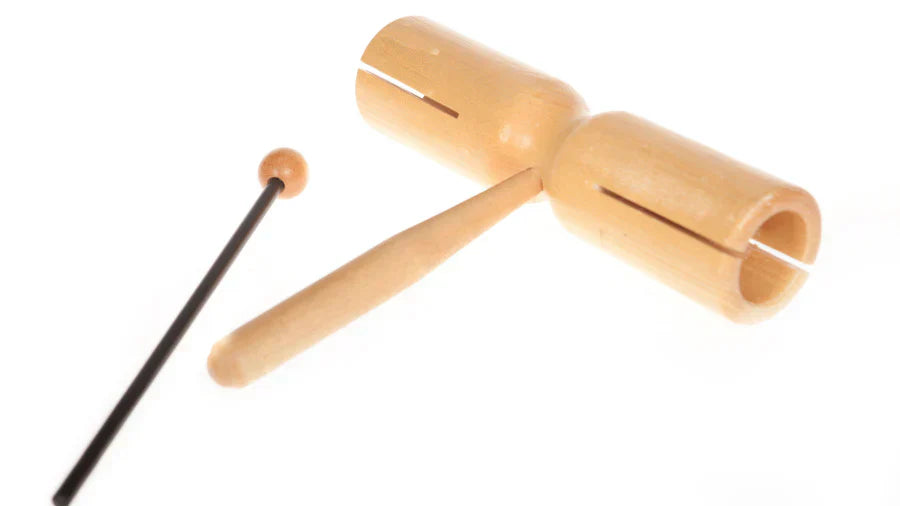
Woodblock instruments crafted from solid wood, have a rich history across cultures and eras. Originating in ancient civilizations, they were used for both ceremonial and musical purposes. In ancient China, woodblocks known as "mu yu" were integral to religious rituals and imperial ceremonies.
In Africa, instruments like the sistrum in ancient Egypt served religious functions, while in medieval Europe, claves provided rhythmic accompaniment for folk music and dances. During the Renaissance and Baroque periods, woodblocks were incorporated into orchestral music by composers like Bach and Mozart. Today, they continue to be used in a wide range of genres, from traditional folk to contemporary music, valued for their unique sound and versatility.
What it was used for

With their rich history, Woodblock instruments have played a pivotal role in various cultures and time periods. In ancient civilizations such as China and Egypt, they were not just musical tools but held profound ceremonial and religious significance. They were a part of rituals, processions, and temple ceremonies; their percussive sound was believed to invoke deities or spirits and aid in cultural practices.
Woodblocks transitioned from their sacred roles to secular settings as societies progressed, becoming integral to musical performances and entertainment. In traditional folk music, they provided rhythmic accompaniment for dances and songs, infusing celebrations and gatherings with a lively and energetic element. In classical music, composers innovatively incorporated woodblocks into orchestral compositions, enhancing dynamics and creating unique textures, showcasing their adaptability and versatility.
Woodblock instruments remain relevant in modern times, finding applications in education and music production. They serve as valuable tools for teaching rhythm, coordination, and musical expression in educational settings. In music production, woodblock sounds are often sampled and electronically manipulated, contributing to creating contemporary beats and electronic music tracks, thus showcasing their enduring adaptability.
Material
Initially crafted from natural materials such as wood, these percussion instruments evolved into essential components of musical performances worldwide. They are typically made from hardwoods like maple or rosewood and produce distinct percussive tones when struck with a mallet or drumstick. Woodblocks come in various shapes and sizes, ranging from single blocks to intricate sets with multiple blocks.
Woodblocks in the musical scene
They are versatile instruments, finding their place in multiple musical genres, including classical, jazz, folk, and contemporary music. Today, woodblocks continue to play a vital role in traditional and modern music, adding rhythmic depth and texture to compositions across the globe.
Where to buy a woodblock?

★★★★★ - " Thank you. Beautiful instrument, carefully packaged and sent quickly". - Verified Buyer
Investing in woodblock instruments offers musicians versatility in creating rhythmic patterns and adding unique percussive textures to compositions. Their compact size and lightweight nature make them portable and convenient for performances in various settings.
Order A Solid Woodblocks Today.
Woodblocks - Frequently Asked Questions
What is a Woodblock?
It is a small percussion instrument made from a single piece of wood. Typically crafted from hardwood like teak, it creates distinctive sounds by striking it with a mallet.
What is the origin of the first Woodblock?
The Chinese woodblock, also known as "wooden fish," was first used by Buddhist priests for chanting. Shaped like a fish, it's hollow and made of wood. Fish were chosen because they're always awake, symbolizing hard work and dedication.
What are their usual dimensions?
Wood blocks are crafted by hand and come in sizes around 9 inches long, 4 inches wide, and 1.5 inches tall.
How do I maintain my Woodblock instrument?
Simply wipe with a clean and damp cloth.
What is the price range for a Woodblock instrument?
Depending on where you purchase and what type you want to buy, they usually range from about £20- £50 - The price is purely dependant on the pricing set by the manufacturer, other costs associated with producing the product whether handmade or factory made, the materials also affect the price with rare exotic woods being more expensive. Simple designs make the process cheaper whilst complex unusual designs typically cost more to develop and maintain.