
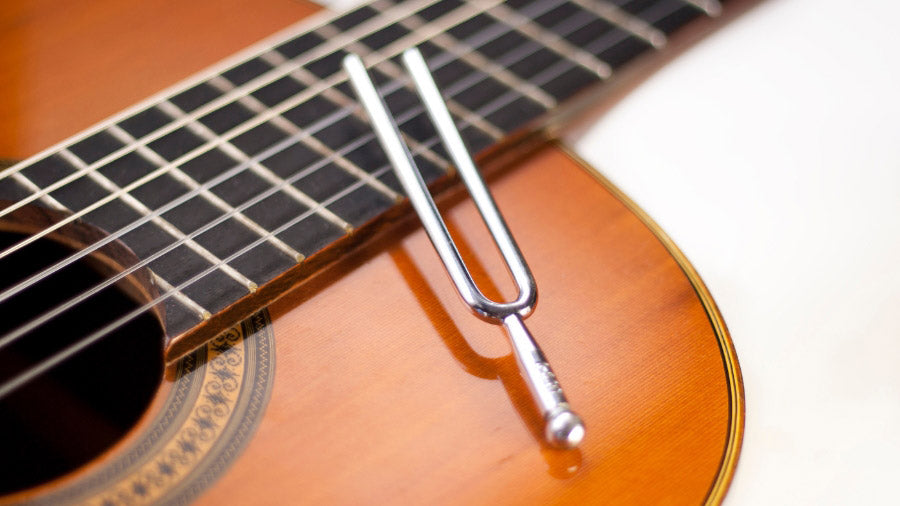
A tuning fork is a U-shaped metal tool that produces a specific pitch when struck. Musicians use its steady tone as a reference for tuning and developing their ear. Simple, portable and battery-free, it also makes vibration easy to explore: two prongs turn a gentle tap into a clear musical note. Here’s how it works, how to use one and what to check before buying.
How Does a Tuning Fork Work?
A gentle strike makes the prongs vibrate, producing a reference tone: a 440 Hz fork sounds A4. Credited to English musician John Shore in 1711, tuning forks help musicians tune by ear and singers find a starting pitch. Choose the frequency for your task and check its stated accuracy; weighted forks have a different vibration response from standard unweighted models.
How to use a Tuning Fork?
To use one, hold the stem, tap gently with a suitable rubber activator and let the initial impact fade. Compare the tone with your instrument’s corresponding note, allowing for octave differences, then adjust gradually. Practise somewhere quiet, keep your fingers off the prongs and avoid hard striking surfaces. Wipe dry and protect it from knocks; do not bend, file or add weights to the prongs.
Where to Buy a Tuning Fork

Our stainless-steel 440 Hz tuning fork provides an A reference for musical tuning and listening practice. Its simple handheld design makes it easy to keep with your instrument, ready to compare pitches without an app or batteries. Choose it for learning to tune by ear; if you need a different reference frequency or specialist equipment, check those requirements before buying.


