Choosing a professional djembe drum isn’t about finding the most expensive instrument—it’s about sound quality, responsiveness, tuning stability, and how the drum translates your technique. Many players outgrow beginner djembes quickly, then feel unsure what actually separates a “professional” drum from an average one. This guide explains what truly matters when selecting a professional djembe, so you can make the right decision regardless of brand availability or trends.
What Makes a Djembe “Professional”?
A professional djembe is defined less by appearance and more by how it performs under skilled hands. These are the core factors that matter.
Shell Material and Carving Quality
Shell material and carving quality determine how a djembe sounds and responds. Professional djembes use single-piece hardwood shells (such as mahogany, lenke, or cedar) with deep, even carving and balanced wall thickness—never glued sections or soft woods. Hardwoods deliver deeper bass and clearer slaps, while precise carving ensures consistent resonance and projection. If the shell is poorly carved, volume and tonal separation suffer. A true performance djembe should feel resonant and alive in the hands, not hollow or muted.
Head Type and Thickness
Head type and thickness define how clearly a djembe speaks. Professional djembes use natural goatskin—never synthetic—stretched evenly with no dead spots, usually in a medium-to-thick weight for balance. Skins that are too thin sound sharp but lack depth, while overly thick skins kill sensitivity. A well-chosen goatskin allows bass, tone, and slap to respond clearly across dynamics, giving the player control rather than just volume.
Rope System and Tuning Stability
A professional djembe must hold its tuning under regular playing. Look for high-quality rope (polyester or equivalent), clean and even verticals, and tight, well-set knots. Good rope work prevents slipping and stretching, keeps the drum stage-reliable, and allows proper tensioning—because even the best shell and skin will sound weak if the tuning system is unstable.
Size and Playing Context
Size matters only in context. Most professionals prefer 10–12 inch heads for balanced versatility, with larger djembes suited to outdoor or ensemble settings and smaller, more responsive drums ideal for studio work or teaching. The best djembe is the one that responds accurately to your technique, fits your body comfortably, and matches the environments you actually play in.
Recommended Djembes for Professional Players
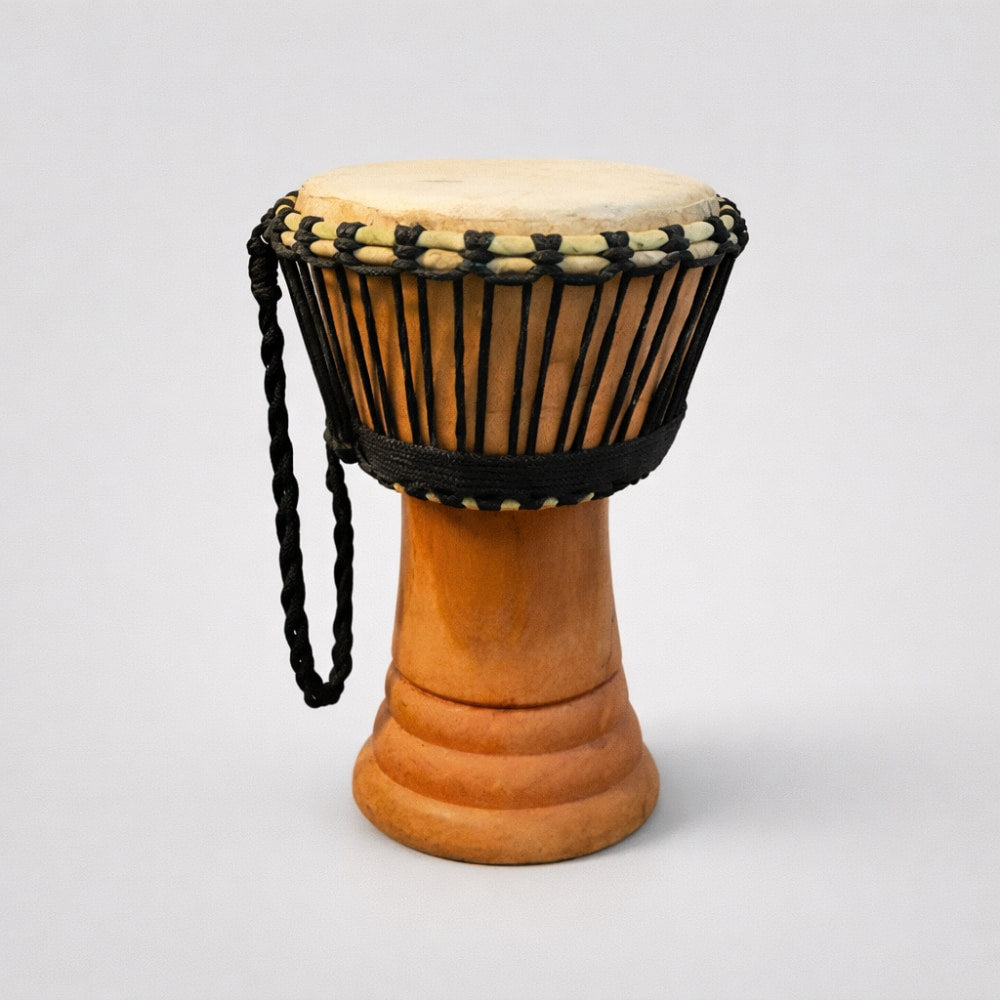
9" Ghanaian Djembe Drum

A compact, hand-carved African cedar djembe with a natural goatskin head. At 3.5kg, it is easier to transport and suits teaching, smaller performances and players who prefer a manageable drum.
Shop 9" Ghanaian Djembe Drum →
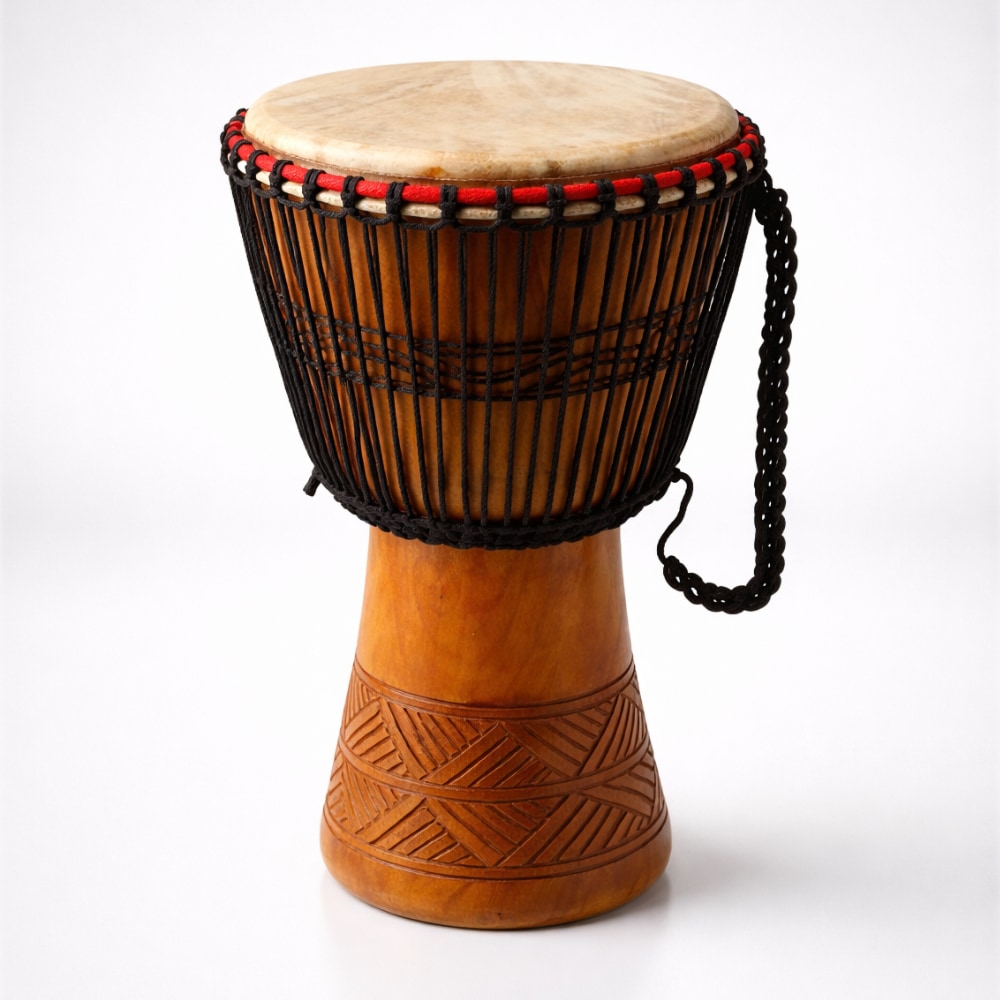
14" Ghanaian Djembe Drum

For players seeking a full-size, traditional djembe, this 14-inch Ghanaian drum offers a larger playing surface for bass, tone and slap technique. Its solid cedar shell and goatskin head make it a strong choice for ensemble and live performance, although its 7kg weight is less portable.
Shop 14" Ghanaian Djembe Drum →
Technique Matters More Than the Drum
Even the best djembe depends on good technique. Hand positioning, accurate bass, tone and slap strokes, and consistent practice make the biggest difference to your sound. To improve your playing, follow our guide to learning the djembe drum.