Songwriting is a creative way to express emotions, tell stories and bring musical ideas to life. Whether you're writing your first song or looking to improve your skills, this complete beginner's guide covers everything from finding inspiration and writing lyrics to creating melodies, understanding song structure, recording and developing your songwriting abilities.
What Is Songwriting?
Songwriting is the process of creating music by combining lyrics, melody, rhythm and harmony to express an idea, emotion or story. Lyrics communicate the message, melody creates the tune, rhythm establishes the timing, and harmony adds musical depth. These elements are arranged into sections such as verses, choruses and bridges to form a complete song. Beyond making music, songwriting encourages creativity, emotional and personal development, while giving you the satisfaction of turning your own ideas into something others can enjoy. You don't need formal training or an instrument to get started.
Finding Songwriting Inspiration and Ideas
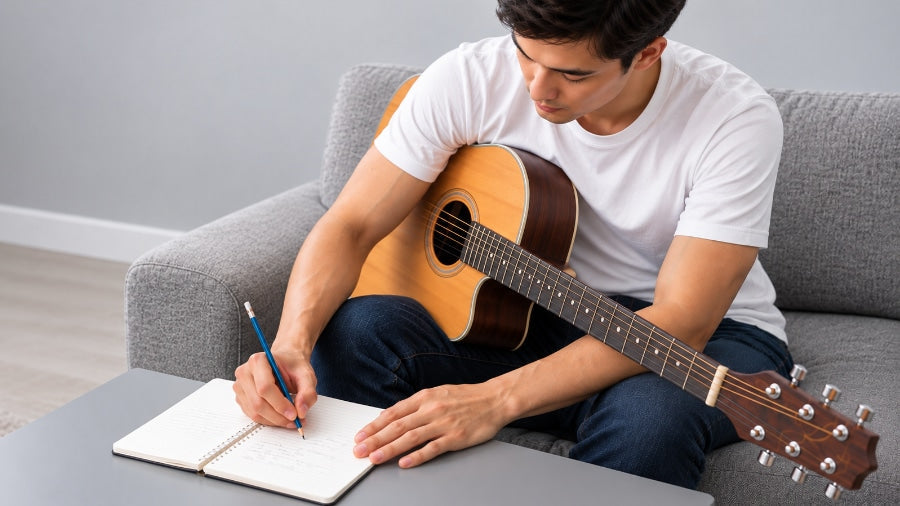
Song ideas can come from personal experiences, emotions, conversations, books, films or everyday observations. Keep a notebook or use your phone to capture interesting phrases, melodies and possible titles. To develop an idea, choose a feeling, event or story and explore it through freewriting for ten minutes without editing. Ask yourself what happened, who was involved and why it matters. Use specific details and imagery to make the idea more compelling, then identify a central message that could become your song's chorus.
How to Become a Better Songwriter
Becoming a better songwriter requires regular practice, experimentation and a willingness to learn. Study songs you admire, explore different musical styles and collaborate with other musicians to develop your skills. Don't rely on inspiration alone; just as a bricklayer doesn't forget how to lay bricks when feeling uninspired, a songwriter can still practise their craft. When experiencing writer's block, either take a break and return with fresh ideas or push through by writing something imperfect. Review your previous songs, identify areas for improvement and keep creating. You can always improve what you've written, but you can't edit a song you never started.
The Songwriting Process
1. Start with an idea
Turn that idea into a clear theme or message then write down possible song titles, phrases and lyrics without worrying about perfection. Write a chorus that captures the main message in a few memorable lines, then develop verses that move the story using specific details, imagery and metaphors. Tools such as ChatGPT can help you explore alternative perspectives or analyse your ideas, but the creative direction should be yours.
2. Write Lyrics and Melodies
Experiment with rhymes and near rhymes, but prioritise meaning over forcing words to rhyme. Develop a melody by singing or humming your lyrics, experimenting with different pitches and rhythms. If you play an instrument, try singing over a simple chord progression such as C–G–Am–F. Sing or rap each line aloud to check that the syllables fit the beat, adjusting awkward phrases until the words flow naturally.
3. Arrange Your Song
You can also begin with chords or a melody and write the lyrics afterwards. Arrange your ideas into a structure such as Verse → Chorus → Verse → Chorus → Bridge → Chorus, remembering that not every song needs every section. You don't need to play an instrument or understand music theory to get started; a notebook, your voice and a little experimentation are enough.
4. Refine
Once you have a complete draft, sing through the song and listen for awkward lyrics, weak melodies, unnecessary repetition or sections that feel too long. Make sure each verse adds something meaningful and the chorus communicates the main idea clearly. AI can offer feedback or suggest alternative approaches, but use your own judgement to decide what improves the song. Your personal experiences, emotions and creative decisions are what give your music its individual character.
5. Record a Demo
Using your phone so you can listen objectively and identify improvements. If you want to develop the recording further, software such as GarageBand or BandLab lets you record separate vocal and instrument tracks, experiment with arrangements and produce a more polished version. A professional microphone or audio interface can help, but isn't essential for your first song.
6. Review and Finish
Make adjustments and decide when the song communicates what you intended. Once you're satisfied, you can share a performance on YouTube or social media, perform it live, or distribute a finished recording to streaming platforms. Most importantly, finish the song, learn from the experience and use what you've discovered to make your next one even better.
Songwriting Careers and Opportunities
Songwriting can develop from a creative hobby into a professional career. Songwriters may write for recording artists, collaborate with musicians, compose music for film and advertising, or earn royalties when their songs are performed, streamed or licensed. Building a portfolio of original songs, collaborating with other musicians and attending songwriting workshops can help develop your skills and industry connections. Organisations such as PRS for Music in the UK also help eligible songwriters collect royalties when their music is used.
Songwriting Courses and Education
You don't need formal qualifications to become a songwriter, but learning from experienced musicians can help you develop your skills more efficiently. Songwriting courses, workshops and private lessons can provide structured guidance in lyric writing, melody, harmony, song structure and recording, along with practical exercises and constructive feedback. Books and online tutorials are useful for independent learning, while collaborating with other songwriters can introduce new techniques and perspectives. Whether you choose formal education or teach yourself, apply what you learn by writing complete songs, evaluating your progress and continuing to improve.
Every great song starts with an idea. Start writing yours today.