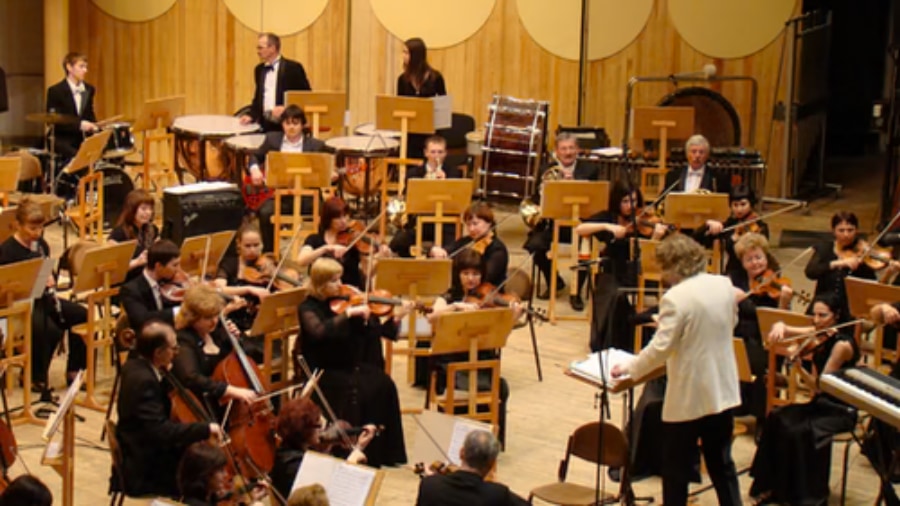
Orchestras combine four main instrument families: strings, woodwinds, brass and percussion. Each contributes a distinct character to the overall sound. Strings and woodwinds can add depth and subtlety, while brass brings power and energy. Together, these instruments create rich textures, convey emotion and bring music to life for the listener.
Woodwind Instruments in the Orchestra

Woodwind instruments add delicate, lyrical and expressive tones to orchestral music. The flute produces a clear, ethereal sound and is often used for melodies and intricate passages, featuring prominently in works such as Debussy's Prélude à l'après-midi d'un faune and Mozart's Flute Concerto in D major. The clarinet, a single-reed instrument, has a rich, versatile tone and can move from soft, expressive melodies to brighter passages.
The oboe uses two reeds to create its distinctive, penetrating sound and traditionally provides the orchestra's tuning pitch, while also carrying melodies and harmonies. The bassoon, the lowest-pitched woodwind, uses a double reed to produce a deep, resonant tone that adds warmth, depth and harmonic support.
Stringed Instruments in the Orchestra

Stringed instruments form the backbone of the orchestra, providing much of its warmth, harmony and melodic foundation. The violin is the smallest and highest-pitched member of the orchestral string family, producing a bright, expressive sound and frequently carrying melodies.
The viola is slightly larger and lower-pitched, adding rich, warm tones that bridge the violins and cellos. The cello produces a deep, resonant sound and is equally effective at expressing melodies, harmonies and emotion. The double bass is the largest and lowest-pitched, providing the foundation for the orchestra's rhythm and harmony while occasionally taking melodic roles.
Brass Instruments in the Orchestra

Brass instruments bring power, brightness and drama to orchestral music, ranging from bold fanfares to rich harmonies. The trumpet has a bright, penetrating tone and is often used for heroic themes and dramatic passages. The French hornhas a warm, mellow sound that adds nobility and grandeur while blending easily with other instruments to create rich harmonies.
The trombone produces a resonant tone and uses a slide to change pitch, providing depth, harmonic support and powerful melodic lines. The tuba, the lowest-pitched brass instrument, provides a deep, resonant foundation that strengthens the orchestra's overall sound and texture.
Percussion Instruments in the Orchestra

Percussion instruments provide rhythm, depth and texture within an orchestra. Common examples include snare drums, cymbals and timpani, each contributing distinct sounds and effects. Cymbals can build excitement and drama, while instruments such as the glockenspiel add bright clear tones. Percussion adds energy and emotion to orchestral music.
Orchestras can also include instruments beyond the four main families, depending on the composition. Keyboard instruments such as the piano, harpsichord and celesta can provide harmony, melody or distinctive textures, with the celesta producing its characteristic bell-like tone. Electronic instruments, including synthesizers and computers, may also be used in modern compositions to create sounds and effects that extend the traditional orchestra. Less common instruments such as the saxophone, bugle, alphorn and didgeridoo can appear in specific works or musical settings, adding distinctive colours to the orchestral sound.
Famous orchestral instrument solos and concertos
Composers have showcased the versatility of orchestral instruments through famous concertos, giving individual instruments the opportunity to take centre stage alongside the full orchestra. Notable violin concertos include Beethoven's, Tchaikovsky's and Brahms's Violin Concertos in D major, while famous cello works include Dvořák's Cello Concerto in B minor, Elgar's Cello Concerto in E minor and Shostakovich's Cello Concerto No. 1.
Other celebrated examples include Beethoven's Piano Concerto No. 5 ("Emperor"), Tchaikovsky's Piano Concerto No. 1, Mozart's Clarinet Concerto in A major, Mozart's Flute Concerto No. 1 in G major, Haydn's Trumpet Concerto in E-flat major and Hummel's Trumpet Concerto in E-flat major. These works demonstrate the sounds and possibilities of individual orchestral instruments.
Tips for beginners learning orchestral instruments
Choose an orchestral instrument that feels comfortable and genuinely interests you. Working with a professional teacher can help you develop good technique and avoid bad habits from the beginning. Regular practice is the best way to build your skills. Short, daily sessions can be more effective than occasional long practices. Focus on fundamentals such as posture, breathing and technique, and set achievable goals to stay motivated. Most importantly, enjoy the process and celebrate your progress as your skills develop.
Where to buy Musical Instruments?

A professional orchestra typically has 80–100 musicians, led by a conductor who sets the tempo, interprets the score and coordinates the ensemble. A symphony orchestra is a general term, while a philharmonic orchestra usually refers to a specific organisation. You can learn an orchestral instrument at any age; regular practice and good guidance are the keys to developing your skills. Orchestral musicians can pursue careers in performance, teaching, recording and freelance work. Ready to explore orchestral instruments?