Many people drift away from music as life gets busier or traditional instruments feel too demanding. If you want to reconnect with music in a simple, relaxing way, the kalimba which is also known as the thumb piano is an ideal choice, inspired by the Zimbabwean mbira and known for its calming melodic sound. This kalimba buying guide explains how to choose the best kalimba based on type, material, number of keys, and price.
Manufacturer
Kalimbas originate from Zimbabwe and were traditionally made from African hardwoods such as kiaat. Today, kalimbas are produced by a wide range of manufacturers, from large-scale factories to smaller workshops focused on materials, tuning accuracy, and finish. Build quality and sound consistency vary significantly, choosing a kalimba isn’t just about brand recognition, it’s about craftsmanship, materials, and how well the instrument is set up for playing.
Popular Brands

Popular kalimba brands differ mainly by craftsmanship, materials, tuning accuracy, and intended use. Hugh Tracey is the most historically significant brand, producing professional African-made kalimbas from kiaat wood and setting the benchmark for traditional sound. Hokema (Germany) is known for precision-engineered kalimbas such as the B17 and the Sansula range, which use membrane-backed designs for enhanced resonance and studio-quality tone.
More accessible brands like Gecko Kalimba offer affordable wooden kalimbas in 8–17 key formats, making them popular with beginners, while Kimi Kalimba focuses primarily on acrylic models chosen for visual design rather than acoustic depth. Carved Culture specialises in carefully sourced, handcrafted kalimbas supported by in-depth educational resources, songbooks, and tutorials—helping players not only choose the right instrument, but learn how to use it effectively. The brands that stand out do so because they combine reliable tuning, quality materials, and meaningful learning support.
Different Types of Kalimba

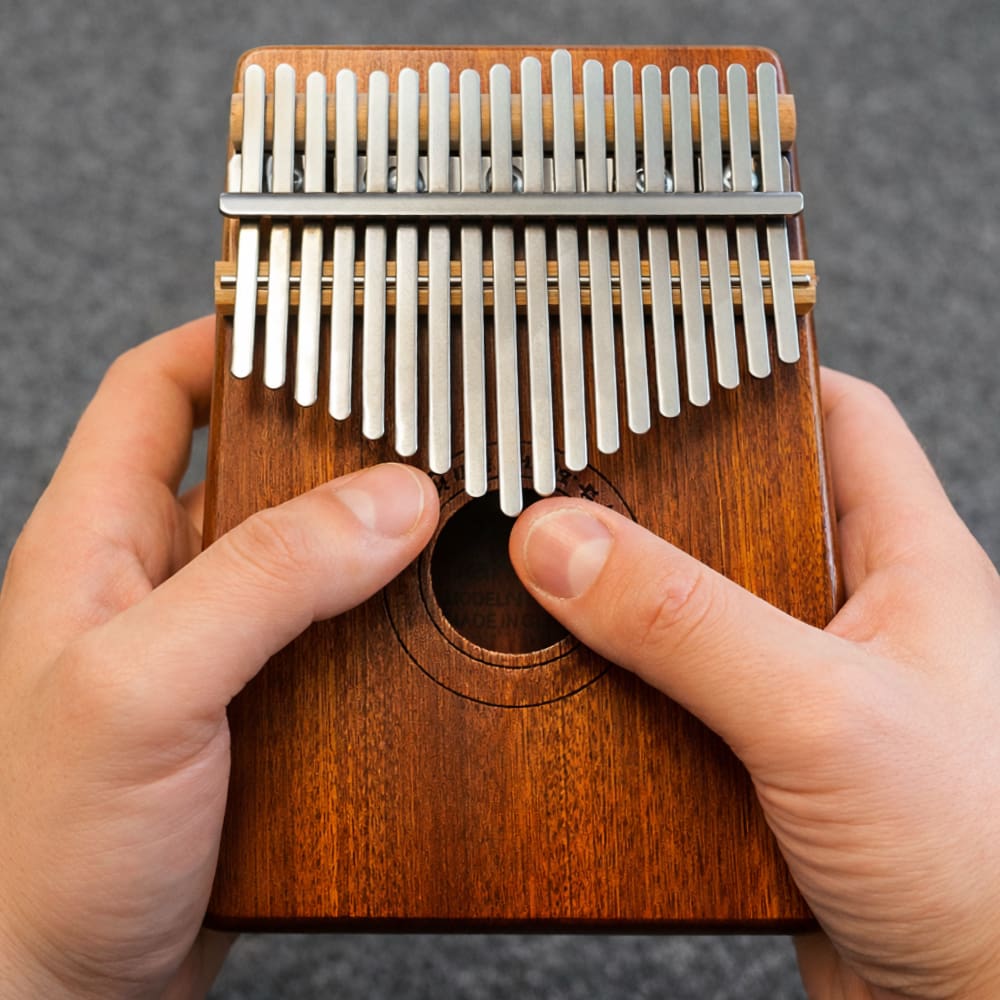
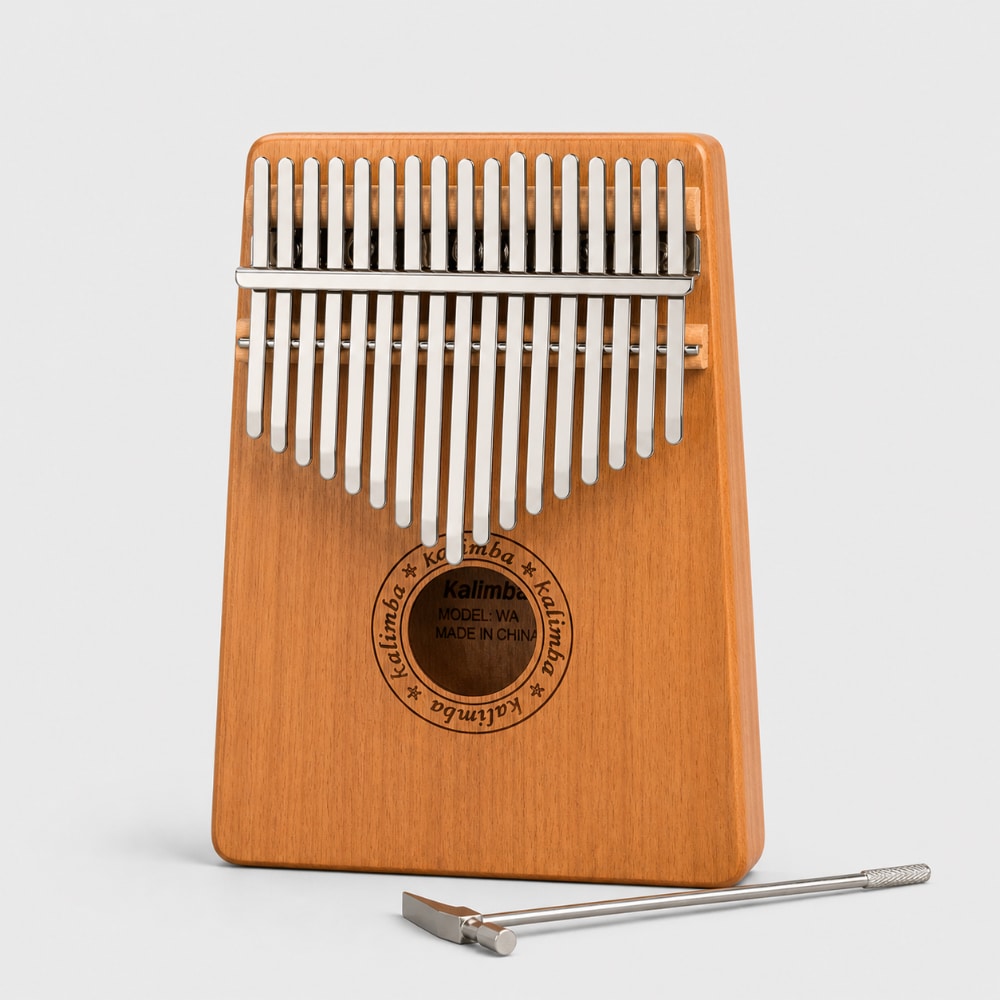
Kalimbas come in several common types, each suited to different playing styles and needs. The standard kalimba, based on the original Hugh Tracey design, is a full-size musical instrument capable of playing most songs and is ideal for beginners and serious players. Pocket kalimbas are small, portable versions designed for casual, on-the-go playing. The coconut thumb piano, traditionally handcrafted in Bali, is a smaller, simpler instrument valued for its natural materials and relaxing tone rather than full musical range. The Sansula kalimba which was developed by Hokema is a unique hybrid instrument that produces resonant sounds and is popular for meditation and studio use, despite having fewer notes than a standard kalimba.
Board Kalimba vs Box Kalimba

Material

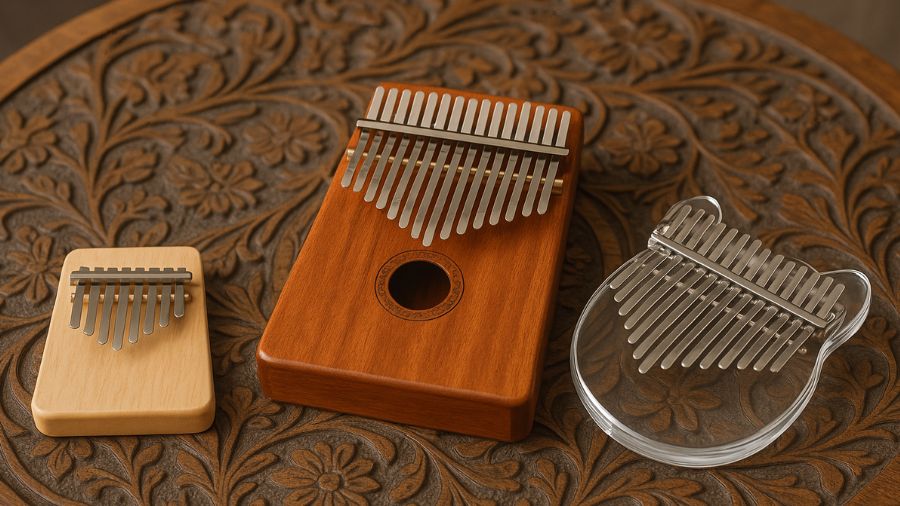
Traditional kalimbas are typically made from African hardwood, most commonly kiaat, with Hawaiian koa also being a popular premium choice (shown first above). Other materials include coconut (centre), gourd, bamboo, maple, cherry, spruce, sandalwood, mahogany, and acrylic (shown third above). Each material influences the kalimba’s tone, resonance, and overall sound character.
Notes / Tines
Depending on where you shop, a kalimba might have 6, 8, 12, 17 or 21 notes. If you’re completely new to the instrument, you could look for a lower number of tines although going for an instrument that has 17 notes means that you will be able to play almost any song. Many kalimbas will come with their own manuals which will help you to quickly pick up the instrument. To simplify the process, we will look at the three models side by side.
Price
Kalimba prices vary depending on size, materials, craftsmanship, and construction. Smaller instruments such as pocket kalimbas are usually the most affordable because they use fewer materials and have fewer tines. Coconut and gourd kalimbas also tend to sit at the lower end of the price range due to simpler construction and natural materials.
Mid-range kalimbas, often with 17 keys, typically include accessories such as a tuning hammer or case and use higher-quality woods with more refined polishing. Premium kalimbas cost more due to superior materials, precise tuning, and craftsmanship, especially when handmade rather than factory-produced. Instruments like professional board kalimbas, membrane-based Sansulas, or electric kalimbas are priced higher because of their sound quality, durability, and the time involved in their construction.
Where to Buy a Kalimba?

If you want a kalimba you’ll actually enjoy playing, focus on sound quality, comfort, and longevity. A well-made wooden kalimba with clear tuning and enough notes to grow with you will feel better in your hands, sound more musical, and keep you playing for years. We recommend starting with a quality kalimba for the best balance of simplicity, range, and value, or choosing a smaller handcrafted model if you want something ultra-relaxing and intuitive. A good kalimba should feel calming, inspiring, and ready to play straight out of the box.