Learning how to play the Ektara Gopichand is surprisingly simple: you pluck its single string to create a drone, then squeeze and release the flexible sides to bend the pitch. However, not every Ektara is built or played in exactly the same way. Different types vary in size, construction, flexibility and sound, which can affect how comfortable they are to hold, how easily you can bend the pitch and the tones you can produce. We'll first look at what the Ektara Gopichand is, the different types available and what to consider when choosing one, before showing you how to hold, tune and play it from your first note through to more advanced techniques.
What is a Gopichand?
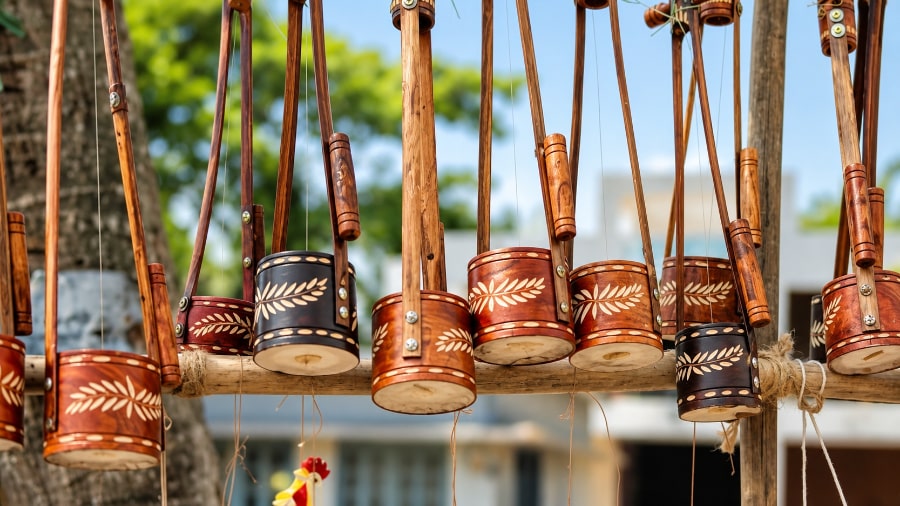
The Ektara Gopichand is a traditional single-stringed instrument found across South Asia, particularly India and Bangladesh, with related forms known by names including Gopichand, Gobijeu and Begijen. Its simple construction typically combines a resonating body with bamboo or wooden sections and a single string, producing a distinctive rhythmic drone that can be altered by squeezing the flexible sides while playing.
Historically associated with folk and devotional traditions, including Baul, Sufi and Bhakti music, instruments of this family developed through generations of rural craftsmanship rather than being attributed to a single inventor. Their portability, simple construction and expressive pitch-bending sound have allowed them to remain relevant beyond traditional music, including experimental music and sound-based practices.
Different Types of Gopichands

Gobijeu is the traditional option with a dark brown frame, rattan detailing and a hand-painted dot-patterned chamber available in various colours. Its tuning peg can be pulled slightly outward and turned while playing to change the pitch, then pushed back in to lock it in place.
Begijen is taller at around 60 cm, with a natural light-brown bamboo construction. Its longer flexible neck creates a more pronounced pitch-bending effect when squeezed, while the coconut-shell resonator gives it greater volume and the strongest bass resonance of the three. Its tuning can also be adjusted while playing in the same way as the Gobijeu.
Gopichand Pro has a more simplistic, premium and compact design, with a larger coconut-shell resonator for amplification and an upgraded tuning peg that allows smoother adjustments to the string note. Despite its compact size, it produces a strong tone with a brighter, higher-pitched character.
How to Play the Gopichand
Hold the Gopichand securely with your non-dominant hand while using your dominant hand to pluck the single string. Start with a slow, steady rhythm and listen to the natural drone. While plucking, gently squeeze the flexible sides of the instrument to increase the string tension and raise the pitch, then release them to lower it again. The key is learning to coordinate your plucking with the squeezing movement so the pitch bends smoothly rather than suddenly.
Advanced Playing Techniques
Once you can comfortably pluck and bend the pitch, experiment with different rhythms, double plucks and changes in playing speed. You can create a vibrato-like effect by repeatedly squeezing and releasing the sides, or use slower movements to create longer sweeping pitch bends. Changing how firmly you pluck also gives you control over the dynamics, allowing you to move between softer drones and stronger, more percussive notes.
How to Tune the Ektara Gopichand
The Gopichand can be tuned to a drone note that suits the music you want to play. On the Gobijeu and Begijen, gently pull the wooden tuning peg outward, turn it to increase or decrease the string tension, then push it back in to lock the tuning in place. Use a digital tuner if you want to match a specific note. The Gopichand Pro uses an upgraded tuning peg for smoother adjustments to the string tension. Once tuned, you can still bend the pitch while playing by squeezing and releasing the flexible sides of the instrument.