Learn how to play the bird water whistle in this easy tutorial guide. We are going to discover the playing position, how to get the best tone and a basic blowing technique that will allow you to create realistic sounds.
What is a bird water whistle?
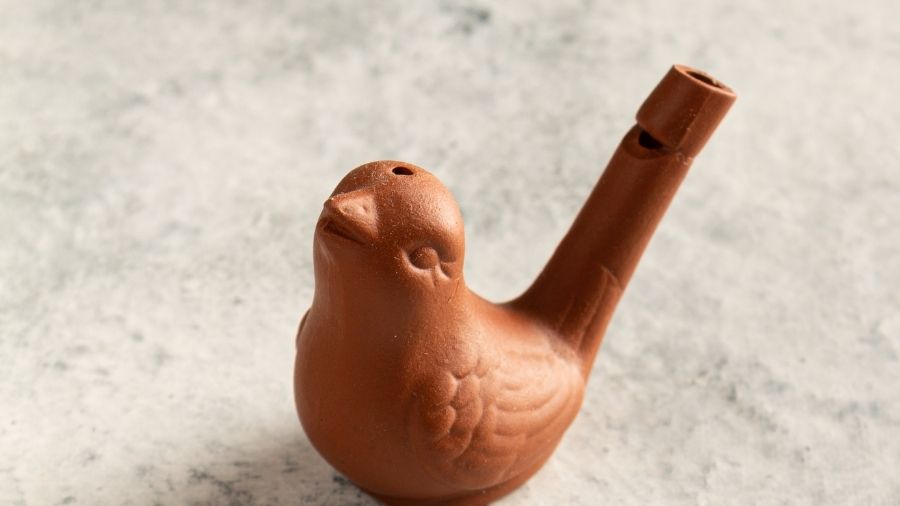
The bird water whistle, also known as a warbling whistle, is made from either clay or ceramic and is typically hand-painted in a variety of colours. These stunning woodwind instruments are fun to play and can produce a variety of different sound tones. They types of bird whistle (also known as warble whistles) are typically produced in China and Peru.
Benefits of Playing the Bird Water Whistle

Not only is playing the bird whistle enjoyable, but it also offers benefits that go beyond simple entertainment. It helps improve your breath control, strengthens the muscles in your mouth and lips, and enhances your listening skills as you tune into the nuances of pitch and tone. Its also a great tool for developing a connection with nature by mimicking bird sounds, which many find meditative.
Explore our bird whistles here.
Playing position
Hold the bird water whistle with two hands and put the necklace cord around your neck to reduce the risk of dropping the fragile whistle on the floor. Bring the mouthpiece to your lips and blow gently to produce a sound.
Changing the tone
Blowing the mouthpiece will produce a sound, but the sound may not be great at first. It will likely be harsh. To adjust the sound, you will need to fill the instrument with water. It’s always a good idea to do this over the sink and add a little water at a time to experiment with the sound and pitch.
Blowing Technique
Just blowing the mouthpiece, even with the water inside the vessel, is only part of learning to play the instrument. The next part is experimenting with fast staccato bursts to create bird chirping tones and slow legato to produce slow, smooth bird sounds.
Advanced Playing Techniques
Once you’ve learnt the basics, try advanced techniques to make your bird whistle sound even more lifelike. Experiment with pitch variation by adjusting your breath speed and pressure to create a wider range of bird calls.
Mimic different birds by altering your breathing; quick staccato bursts can simulate sparrow chirps, while slower notes resemble owl calls. To add more expression, play with dynamics—varying your breath volume can make your bird calls more dramatic and natural-sounding.
Troubleshooting Common Issues
If you're encountering issues with your bird whistle, here’s how to fix them: If the sound is too harsh or high-pitched, try adding more water to achieve a deeper, resonant tone. If no sound is coming out, ensure you're blowing gently and the mouthpiece is properly positioned against your lips. For unstable or fluctuating tones, adjust the water level and experiment with slower, steadier breaths to produce a more consistent sound.
Bird Whistle (Frequently Asked Questions)
How Long Does It Take to Learn a Bird Water Whistle?
A bird water whistle can be played within minutes by simply adding a small amount of water and blowing gently into the mouthpiece, most people can produce sound almost immediately. There is no technique to memorise or coordination to learn, which makes it ideal for first-time players. While the basic sound is instant, the instrument still offers room for exploration—changing breath pressure, tilt, and water level creates different bird-like tones, allowing you to experiment and develop different sounds over time.