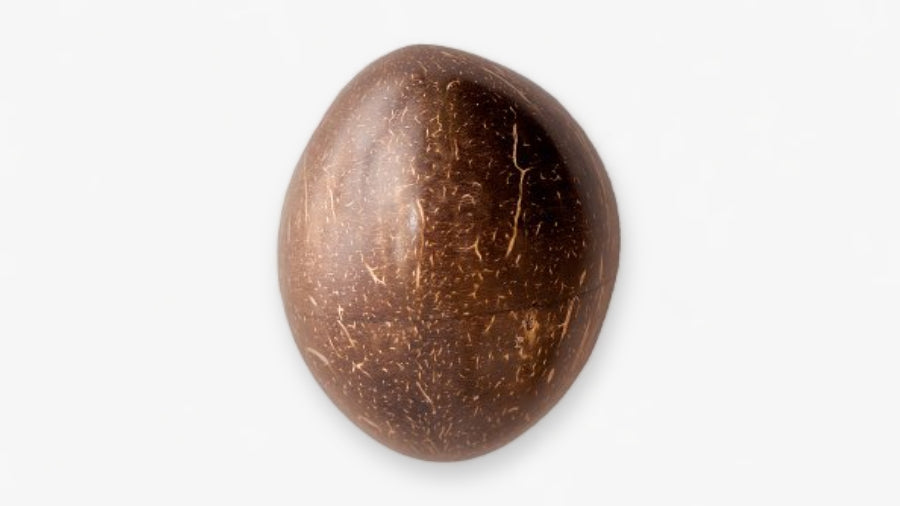
Coconut shells make excellent natural percussion instruments because they are lightweight, durable and naturally resonant. In this guide, you’ll learn how to turn a coconut into a simple shaker that produces a bright rhythmic sound.
Before getting started, you’ll need a coconut, dust mask, protective eyewear, drill, small saw, chisel, butter knife, sandpaper, scissors, a small amount of wood glue, shaker filling such as dried beans, seeds or beads, and a suitable plug or piece of wood for sealing the opening.
1. Drain the coconut
Start by drilling one or more small holes through the coconut shell. Drain the coconut water completely and rinse the inside of the coconut.
2. Remove the coconut flesh
Carefully enlarge one of the holes enough to remove the coconut flesh. Use a butter knife or suitable tool to separate the flesh from the inside of the shell. Remove as much of the flesh and inner pith as possible. The coconut flesh can be eaten or saved for making coconut milk, oil or desiccated coconut.
3. Dry the shell
Allow the empty coconut shell to dry thoroughly. This is important because any remaining moisture inside the shell can contribute to mould.
4. Smooth the shell
Use sandpaper to smooth the outside of the coconut and remove any rough edges around the opening. You can also lightly sand the inside to remove loose fibres and pith. Take care not to make the shell too thin, as the natural thickness helps give the shaker its characteristic resonant sound.
5. Add the filling
Once completely dry, add your chosen shaker material through the opening. Dried beans, seeds or small beads can all produce different sounds. Experiment with the amount of filling. Less filling allows the contents to move more freely, while more filling creates a denser, louder sound.
The sound of a coconut shaker depends on the size and thickness of the shell, the type of filling and how much filling is inside. Coconut produces a naturally earthy, resonant character, while seeds, beans and beads create different levels of brightness and texture. Try experimenting with different fillings to find a sound you like. You can also make several shakers with different amounts of filling to create contrasting percussion sounds.
6. Seal the opening
Place a suitable wooden or cork plug into the opening and secure it with wood glue. Make sure the opening is completely sealed so that the filling cannot escape. Allow the adhesive to dry completely according to the manufacturer's instructions before playing the shaker.
7. Finish your coconut egg shaker
Finally, sand any rough areas and check that the shaker is comfortable to hold. You can leave the coconut shell natural or decorate it with paint, patterns or other materials. Shake it gently to test the sound. Your homemade coconut shaker is now ready to play. Making a coconut shaker is a simple way to turn a natural material into a musical instrument. The same basic principle can be used to create many different types of handmade shakers and percussion instruments. If you would rather start playing than make your own, we have a ready-made coconut shaker designed for exactly that.
Buy the Coconut Shell Maraca

Our Coconut Shell Maraca is a handmade percussion instrument made from a polished coconut shell filled with beads and mounted on a turned wooden handle. It produces a bright, rhythmic sound and can be played on its own or together with a second maraca for a fuller sound. Each maraca has its own natural character, with variations in the coconut shell and hand-painted design making every instrument slightly different.